
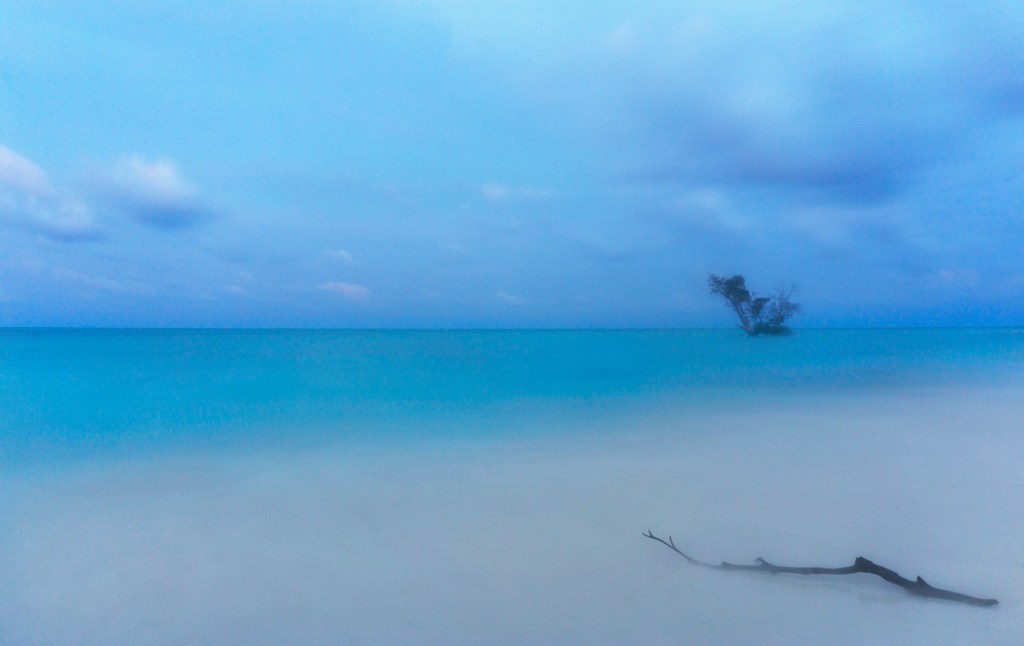
It is not only about the magnificent colours of the sea, or the beautiful white beaches and the rich underwater world. It is also the slow paced, peaceful environment, the lovely and warm people that make the islands of Havelock and Neil in Andamans a top choice to dissolve your logjams of mind and soul. And once there, the weak (or the absence of) digital connectivity will help to keep all the unnecessary distraction at a distance – you will once again have the opportunity to feel closure to yourself and the nature around you.
Words of caution: If you are a person who wants super touristy-infrastructure, shopping malls, glittering nightlife, clubs, discos, royal service etc. – you better look elsewhere buddy.
It is often said that the islands are over-run by tourists, which we did not find to be the scene during our stay – only in two sunset spots we found it to be a little crowded with some trade-marked tourists – bundled in tight circles – but the numbers were far below the danger mark and a 30 second walk along the beach provided us with the required serenity. However, we must confess that we were lucky to have found the Elephanta beach totally devoid of tourist – but we will come to that later.
Overnight in Port Blair
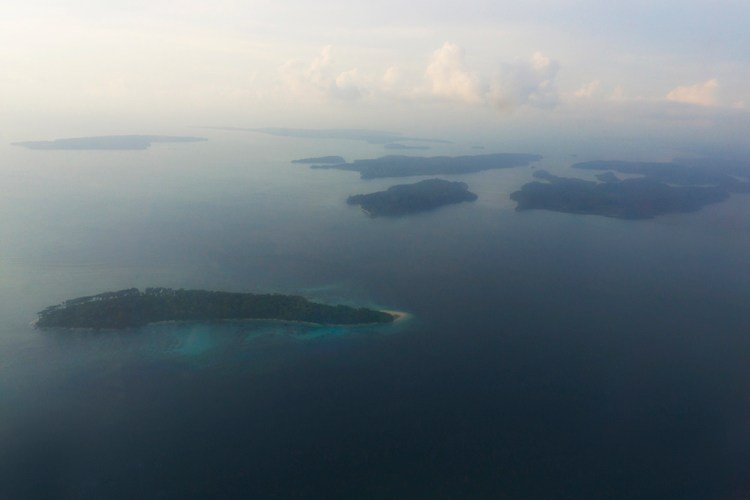
Our flight from Kolkata got delayed by two hours. It was almost 4 in the evening when the islands came into view below the clouds – floating atop a slate of blue. Be sure to book you seat on the left side of the airplane if you are travelling to Port Blair. The blue water of Bay of Bengal started to come near as we descended towards Veer Savarkar Airport in Port Blair and soon for a brief period, the sea beneath us got replaced by colourful tiled roofs and green trees before we touched down. The small, no frill airport was a just kind of airport we have expected – a good sign that the town of Port Blair is yet to get laden with the undesirable tawdriness and rumpus.
We hired a car and rode towards our guesthouse. We found Port Blair to a clean, pleasant town having a cosy demeanour with colourful houses and undulating roads. Our guest house “Shelter at Sea” (www.theshelter.in) was located near Dignabad junction right on the sea front. The wonderful view of the bay from the 2nd floor balcony made us happy as we sipped on our hot tea. A cool breeze carried the blue waves onto the shore before percolating our hair and making our clothes ripple. This homely guesthouse is located on the second floor and those who have troubled legs, should know that there is no lift.
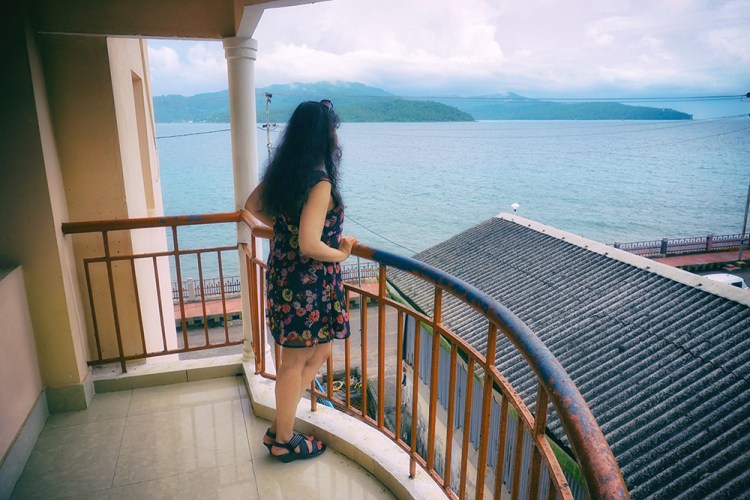
Coming to Port Blair from Kolkata in late January, we found the coldness of our hometown gone and temperature to be pleasant on the skin. After a refreshing shower, and another round of tea at the balcony we took a short walk along the red paved walkway hanging over the shoreline. The cove was dark except when the rotating white light from the lighthouse located on the opposite shore kept sweeping it with a narrow shaft of white light at precise intervals. We made our way towards a restaurant called “Amaya” located on the roof top of Sea Shell Hotel. It was a short uphill walk from our place and soon we found ourselves in a chic environment, on a comfortable set of sofas.
The view of the bay, which looked dark at the moment, looks stunning during sunset. One can also enjoy live music here (except on Mondays). We concentrated on the offerings – the food was delicious and the first evening of our holiday was celebrated with some generous amount of wine.
The Cellular Jail, A Breezy Ferry Ride and Vijaynagar Beach
The next morning, we checked out of our hotel around 9 in the morning. Our ferry to Havelock island was at 12.10 in the noon and thus leaving us with ample time to visit the Cellular Jail. We hired an auto-rickshaw (tuktuk), loaded the luggage and reached in front of the gates in no time. The islands is a safe place and we left our belongings in the vehicle and made our way towards the ticket counter. (Entry fee: Rs.10/-)
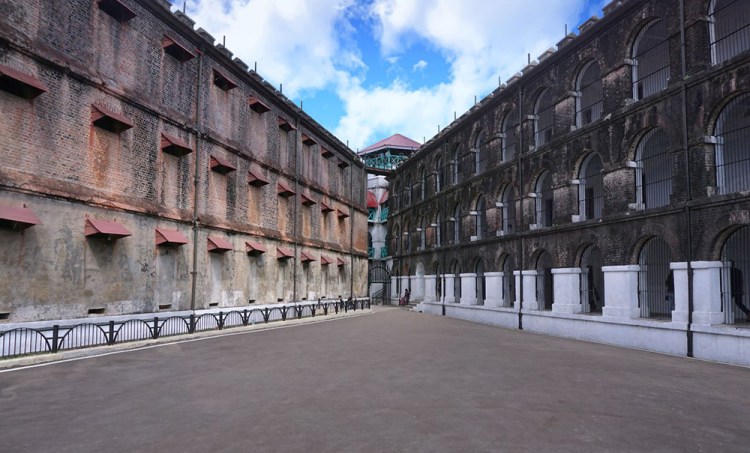
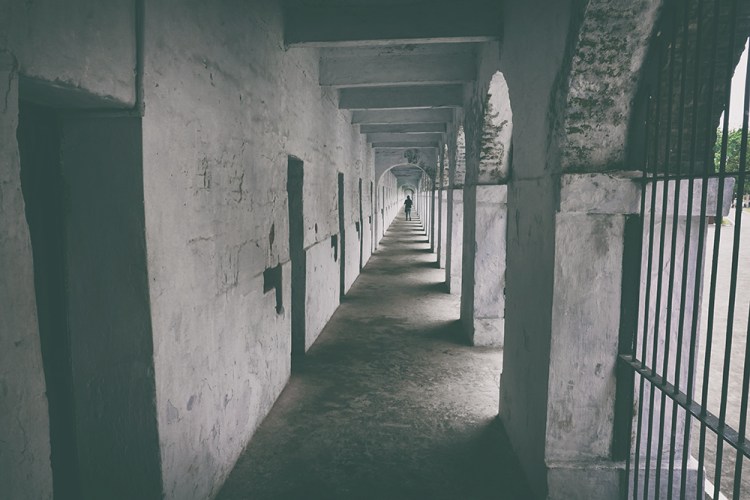
Andaman’s modern history, cellular jail and India’s freedom struggle are intricately related. After the Sepoy Mutiny of 1857 AD, the British set up a penal colony in Andaman (present day Port Blair) and constructed his huge jail to imprison the convicted or captured freedom fighters. It was quiet morning for us as we visited the galleries, exhibits and the cells, the gallows – and learnt about pain and atrocities of the past – which were in stark contrast with the beautiful island and the seas. The jail has 693 cells each one measuring 13.5’ X 7.5’ spread over seven wings of three floors each. It has been designed in such a way that anyone could keep an eye on all the cells, from one central tower. The layout also ensured that two prisoners are not able to see or talk to each other – thus all cells are actually solitary. It was funny though, when we saw that people and newly weds (Andaman is very popular among honeymooners) taking selfies with smiling, pouted faces with the jail and the cells as backdrop.
As the island is far from the mainland and surrounded by sea, the jail was termed as “Kala-Pani” – which referred to the prisoner’s exile among endless water. The jail was briefly used by the japanese military when they occupied the island after second world war. Today the jail is a national memorial reminding us of the sacrifices that made India’s freedom a reality.
One can attend a light and shadows show which takes places at 6pm (in Hindi) and 7.15pm (in English) everyday except Monday and public holidays.
Our tuktuk dropped us in-front of the jetty gate. We walked around 200m out on the jetty and waited inside the ticket check-in office. We had booked ticket for Green Ocean ferry for Havelock island because it has open deck. We faced a bit of log jam inside the office as there was only one check in counter. But soon we were inside a nice comfortable sitting area inside the ferry.
Now here is some information of ferry service:
There are (during our time of visit) three ferry services which you can avail to reach Havelock and Neil island and back.
The cheapest one is the ferry service run by the government. It has a top open deck and an air conditioned sitting area. Ticket comes at around Rs.500, but the main problem is with booking the tickets. There are no online portal – tickets are issued 48 hours from the date of journey from the jetty office. Travel agents, touts and few hotels are your only option you want guaranteed ticket for this ferry. Also unlike other two services, here you (or a hired coolie – takes around Rs.300) have to carry your luggage into the seating area – and if your baggage is heavy, it could prove to be quite a burden. But the seating area is quite comfortable. There are no snacks counter. We took the government ferry from Neil Island to Port Blair and it was arranged by our hotel – Pearl Park.
Green Ocean Ferry provides online booking (www.greenoceancruise.com) and has a open decks, snacks counter, play nice movies in the sitting area. You don’t have to carry your luggage inside – they are collected outside and has a separate area to keep them. We loved this ferry while going to Havelock from Port Blair. They play loud music out on the deck and you will have people dancing – if you have an aversion to that – you can either keep yourself inside the sitting area or climb up to the higher deck. Another to thing to know is the steps to the toilets are steep.
Makruzz is a high speed option. Very modern, trendy but no open deck. If the sea is rough, you can expect quite bit of rolling in Makruzz – and the staff is pretty generous with the sea sickness bags. You can book the tickets online for Makruzz. We went to Neil Island from Havelock on Makruzz.
Green Ocean ferry has a nice sitting area. In Green Ocean you do not have to carry the big luggage on board yourself. They are collected from you outside and they keep it in a separate storage area. You are not allowed to leave the sitting area for 15 minutes after departure. But after that most of the people spend their time outside on the decks enjoying the beautiful vistas of open water, sky and the island shores. There is snack counter on the other side of deck also. If you are lucky you can see the flying fish too. Look out for the red and white North Point light house rising over the the North Bay island on your left side. This is the lighthouse that appears on the twenty rupee currency note.
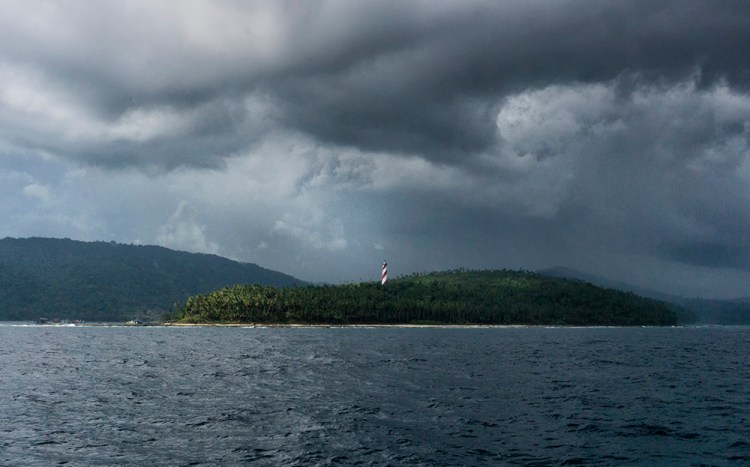
The skies were cloudy and provided a touch a drama to the scene. The sea constantly changed its shades of blue as the sun played hide and seek among the clouds. It rained for a while in between.
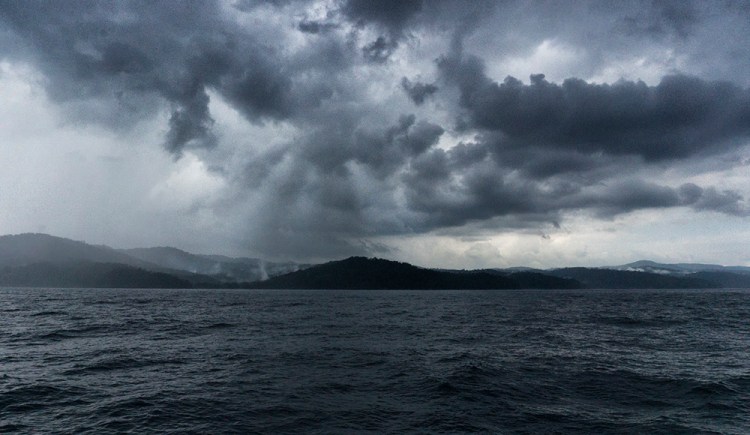
Mid-way to the journey, the skies opened up and loud Bollywood dance numbers began to play on the deck speakers. After some initial foot tapping, people started full flow dancing. Some may not find this in concurrence with the unperturbed vistas. But nevertheless it was pretty enjoyable.
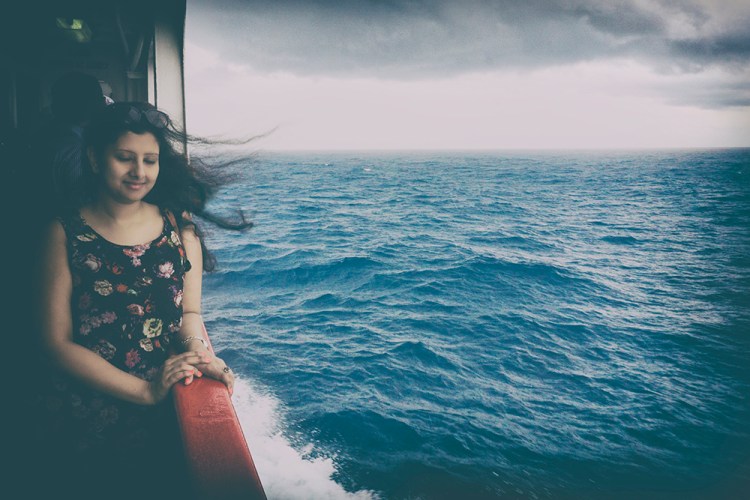
The shoreline of Neil Island came into view on the right side and then came that of Havelock Island’s. A band of green trees separating two shades of blues – the turquoise blue water of the sea and the sky blues with cotton clouds scattered in randomness. Our ferry slowly turned east along with the shoreline and sailed past the white lighthouse near Elephanta beach. 15 minutes later it docked onto the Havelock jetty.
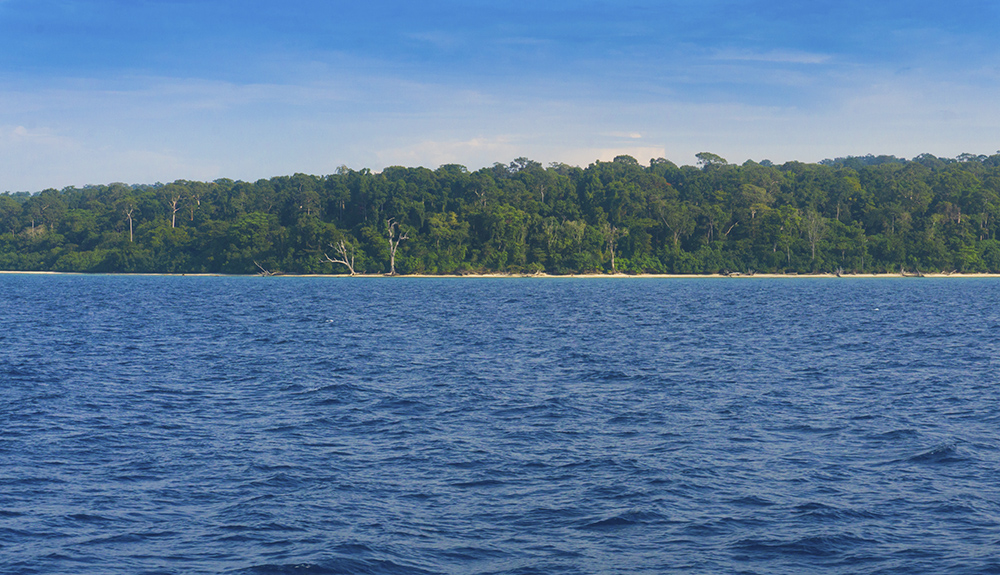
Outside the ferry, standing on the small cemented jetty strip protruding into the sea, the amazing blue waters amazed us. We have booked our accommodation at Wild Orchid (www.wildorchidandaman.com) and we found a car waiting for us outside the jetty gates. It was a 15 minute drive to the hotel. Wild Orchid is a chilled out place – nice sets of cottages, nestled among the palms – the beautiful beach of Vijaynagar hidden behind a copse of trees, a mere 90 seconds walk among the greenery. The rooms was spacious, clean and comfortable with a sit out porch in the front. The top is thatched but the inside ceiling is all wooden. All in all we were happy with our choice. More importantly, the place reflected the peaceful and stress-free environment of the island.
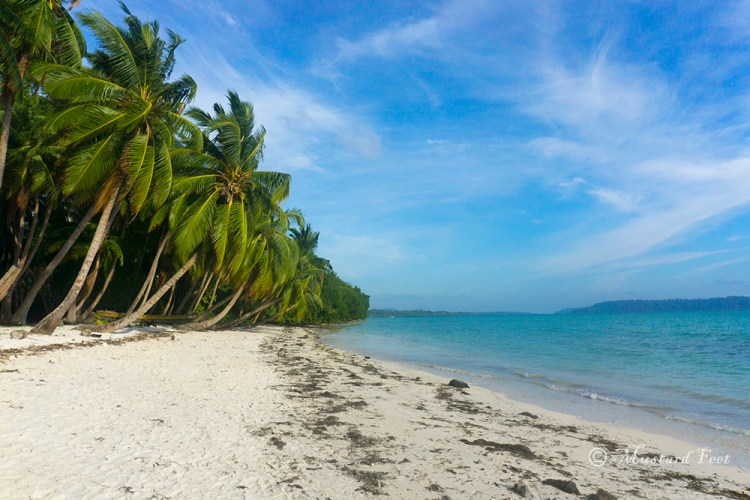
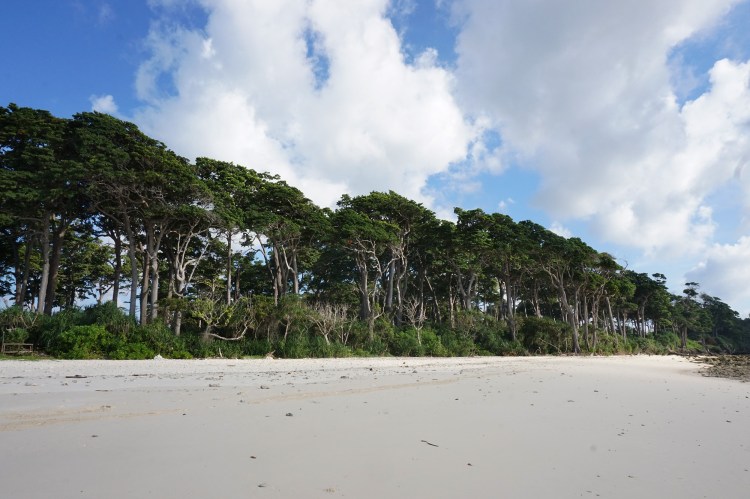
Within an hour we walked out of our cottage and sat down at the Vijaynagar Beach. It was a narrow beach with amazing water at one side and lush green tress at the other. There is a line of hotels along this beach – but they have kept themselves hidden behind these line of trees and thus preserving the natural beauty of the beach. One thing we noticed that almost all the hotels have not destroyed the ethos of the place, the sole exception may be the government run Dolphin resort who have just destroyed the beach in front of them by erecting a 4 feet high wall on the edge of the water to build a private lawn in place of the beach.
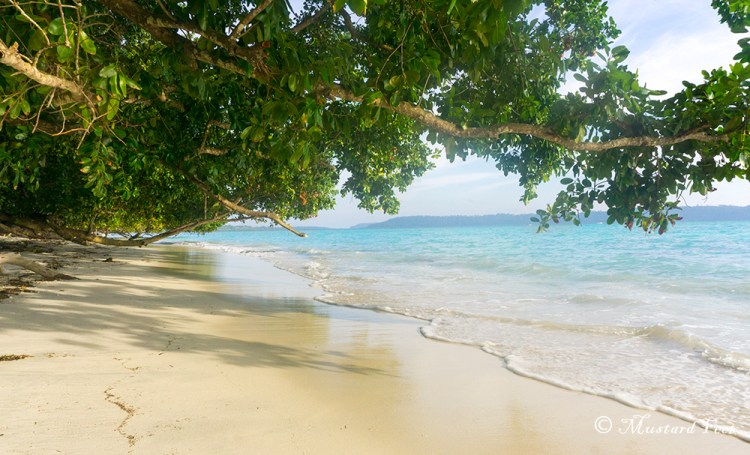
Sunset was approaching fast and a sunset bath was very tempting. We took dips in the pure blue waters and had a walk. Here you can just leave you belongings at one place and go for a bath or a walk – do not have to worry about theft. At many places the trees bowed down to meet and welcome the incoming waves – their trunks providing natural sitting places.
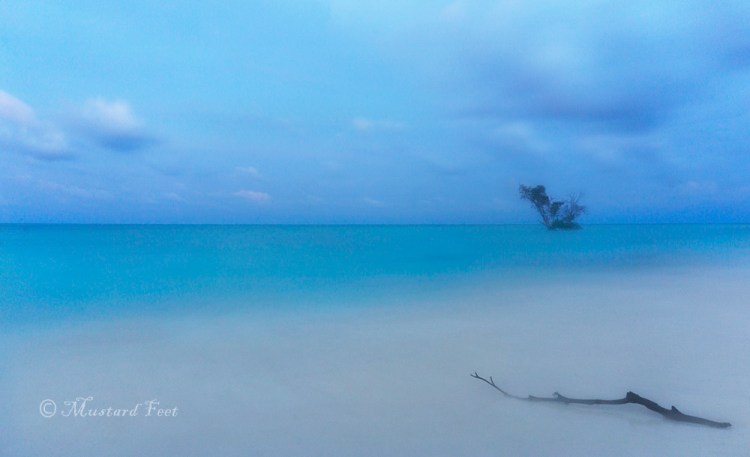
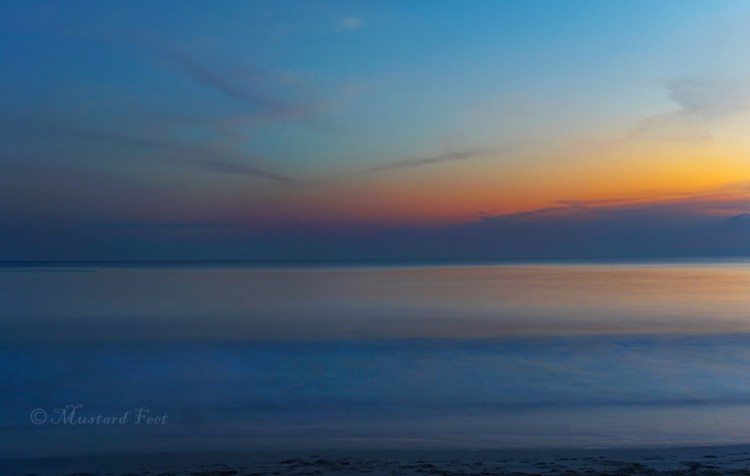
Vijaynagar beach is a sunrise beach as it faces east. Light faded as sun dipped behind us and as the blue hour (twilight) came, the place looked amazingly beautiful. We went to our cottage, changed and sat down at the hotel’s Red Snapper Restaurant – considered as one of the best places to eat on this island. Keeping true to the claim, the food proved to be lip-smacking. We chose a white snapper fish from the “catch of the day” collection and it tasted just awesome.
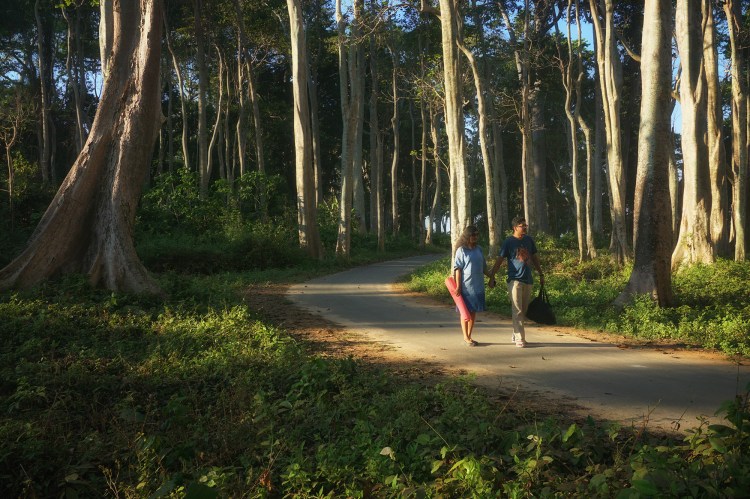
After dinner we went for a walk on the road. It was so quiet. It was so peaceful. The trees that lined the small island road swayed in the night wind and the rustling of the leaves creating the perhaps the perfect background score for our night walk. While returning, we hired a scooty for two days from the shop across the road. It costs Rs.450/per day plus cost of petrol.
A trek to Near Empty Elephanta Beach, Sunset at Spectacular Radhanagar
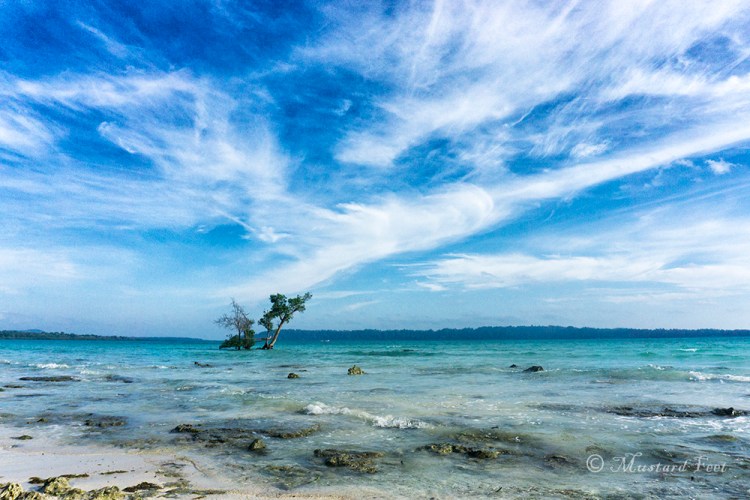
Next day we took a stroll in the Vijaynagar Beach. The tide and ample sunshine were kissing the sands. The trees looked greener, the water alarmingly blue. It was such a great experience to walk on such a beautiful beach with no-one at sight.
The walk made us hungry and it was during breakfast we came to know about the strike. We learned that government has passed an order, prohibiting transport of goods to the small islands from Port Blair by small commercial boats, popularly termed as “dongi”. The order was passed after a “dongi” capsized few days back and henceforth all such goods transportation will done through certified big ships. Naturally, the “dongi” owners have called a strike and until things streamlined, there was a crisis of essentials like petrol, cooking gas etc. in Havelock island.
But, we found a silver-ling to this crisis. We could visit the beautiful Elephanta Beach being totally devoid of tourists. The Elephanta Beach is located within a reserve forest and there are no drive-able roads to reach it. You can reach it either by boats from the jetty or a by a 1.8 km hike through the jungle. Each day the beach gets about 600 visitors (almost all of them takes the water way) and its shoreline gets crowded with the tourist boats. But because of the strike and petrol crisis, boats to Elephanta was closed for that day. So we picked our scooty and was on our way.
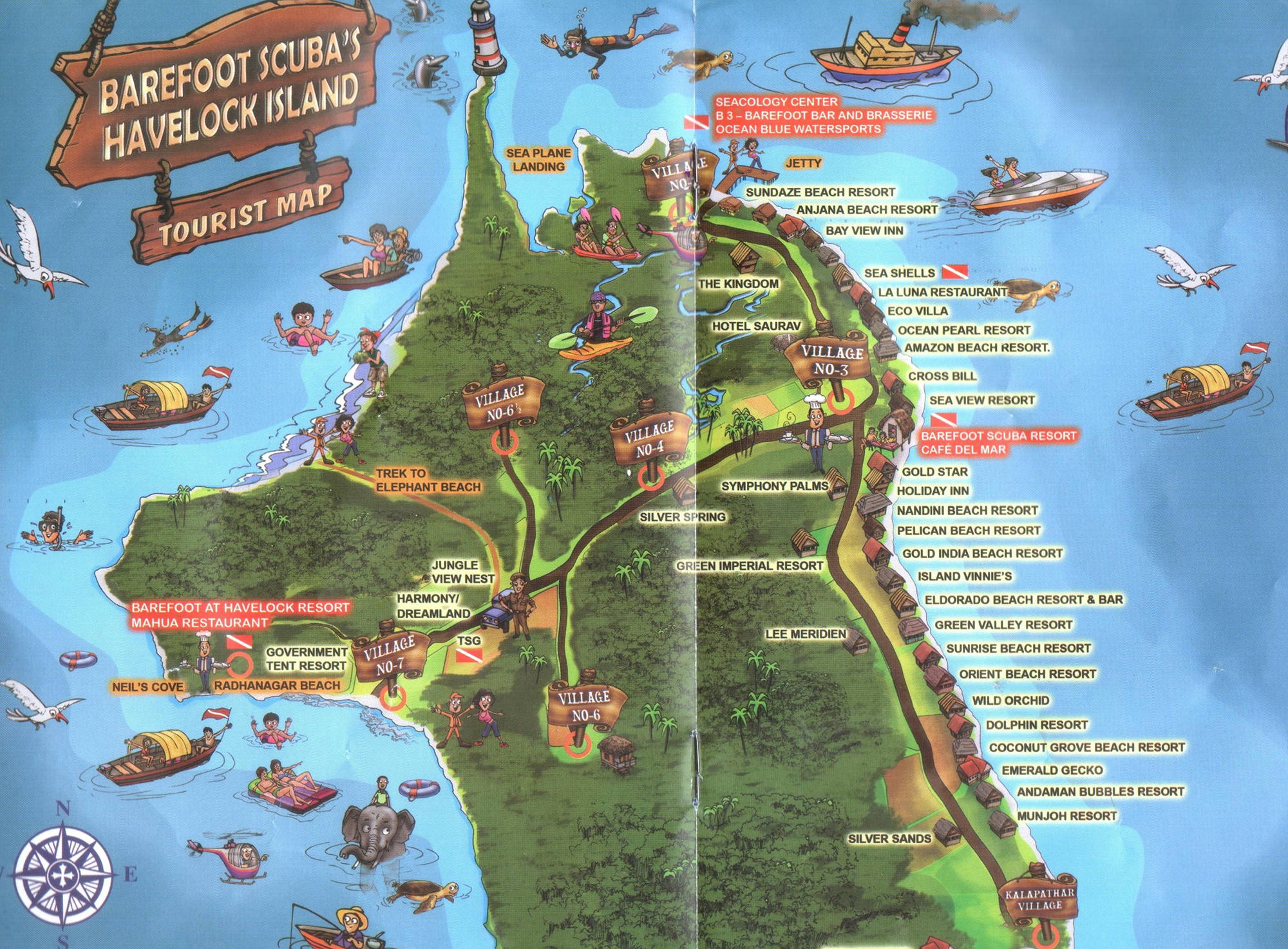
Roadmap of Havelock island is pretty simple. One road starts from the jetty in the north end, runs parallel to the eastern shore, towards south.Halfway along the island’s length the road ends among deep jungle. 2 km from the jetty another road branches off towards west and ends at Radhanagar beach at the western side of the island. It is on this road, few km before Radhanagar beach, we came across a signboard “Trek route to Elephanta”.
Under a shed beside the road, few boys and men were sitting. When we parked one of them, Tarun, came forward and said they are guides. Though we have read (and later found) that the trek is well-marked, but we decided to take Tarun, a 19 year old local boy to take us to the beach. The path was muddy at parts, lots of ups and downs – but it was beautiful. With tall tropical trees towering above the shorter ones and us, the forest was dense and lush green. We also came across elephant foot marks (not wild – there are two tamed elephants in the jungle kept by the forest department). Half and hour later we came to and opening with mangrove trees all around. The trees here have pneumatophores – breathing roots, sticking out from the ground – much like the ones in Sunderbans near my home town Kolkata. During high tides, this opening gets filled with water and if you happen to come across such a time, be ready to wade through knee deep water.
On the other side of the opening, beyond a few shrubs, the Elephanta Beach welcomed us with its stunning beauty. The blues of the water was mesmerizing. We just sat under a shade of tree and kept admiring the place. There was about 4-5 tourists, 3 ladies selling fruits on the backside, one coconut seller and 4 snorkelling guides – otherwise the whole place was totally empty – the silver lining of the strike. Quite a number of trees were uprooted by the tsunami in 2004, and they can be seen all along the beach – adding an uniqueness to the place.
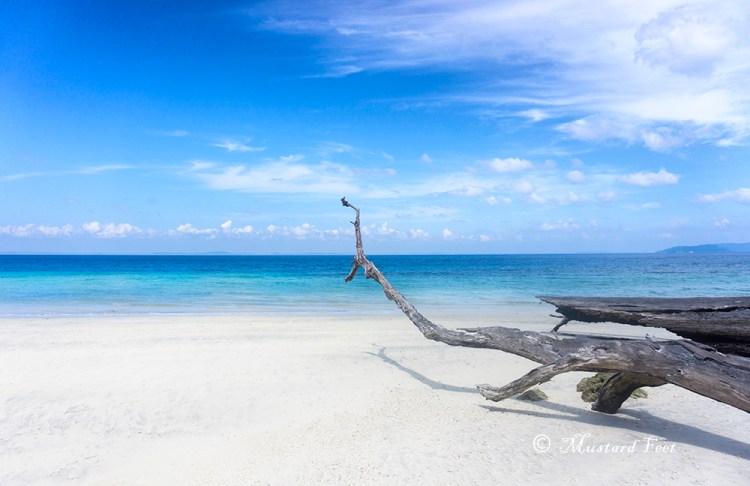
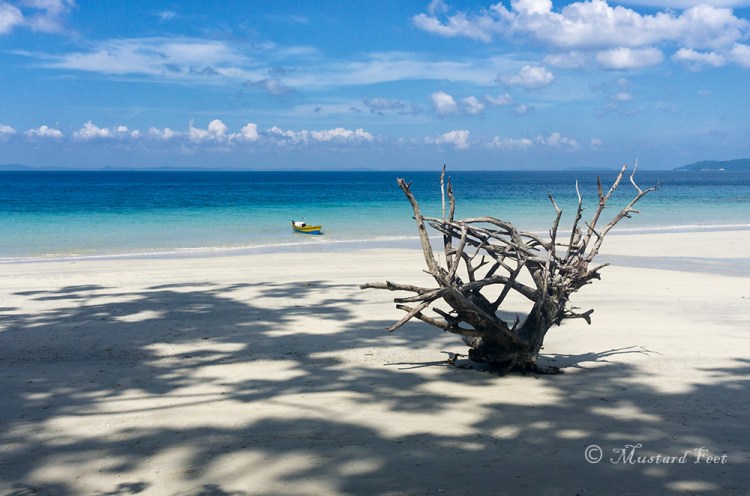
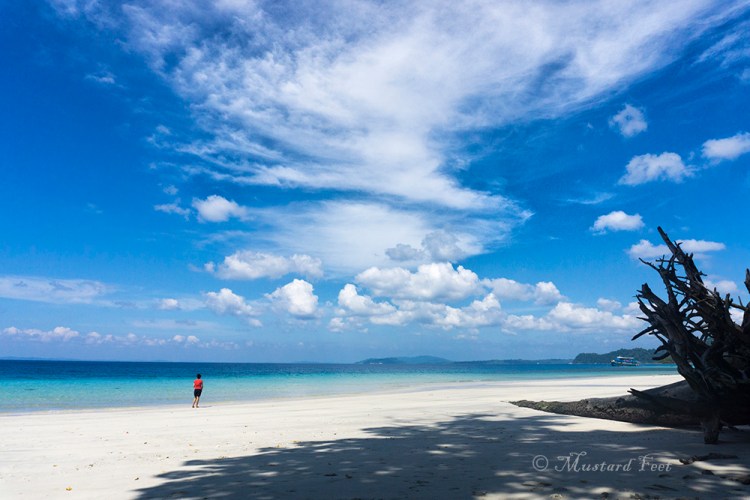
Bathing in the azure blue waters was a great feeling. We ate fresh fruits for our lunch, drank coconut waters and after a while went for snorkelling. Visibility was lovely (due to lack of tourists) and we saw a lot of colourful fish and some colourful corals – but many were bleached also. The coral reef in Havelock is situated between the Elephanta beach and the Radhanagar beach. For a better experience, move away from the main beach area towards Turtle Beach to the south. Tarun, our guide, told us that on a normal crowded day, the experience is not so fun as hordes of people engage in the activity and the water loses its visibility and fish move away – so we are the lucky ones.
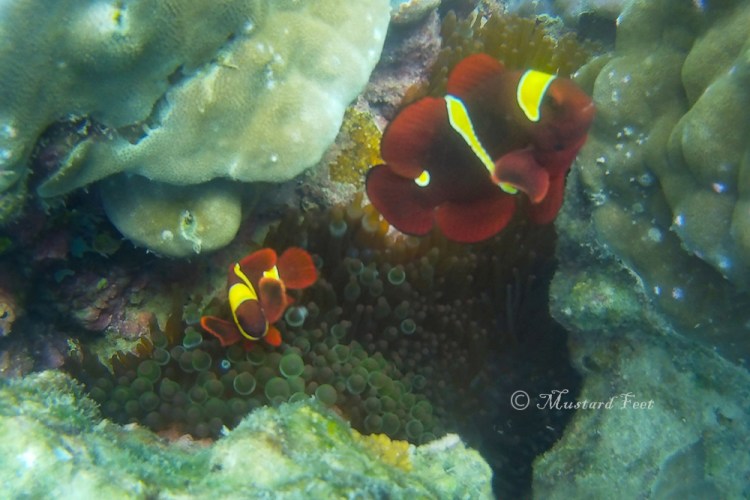
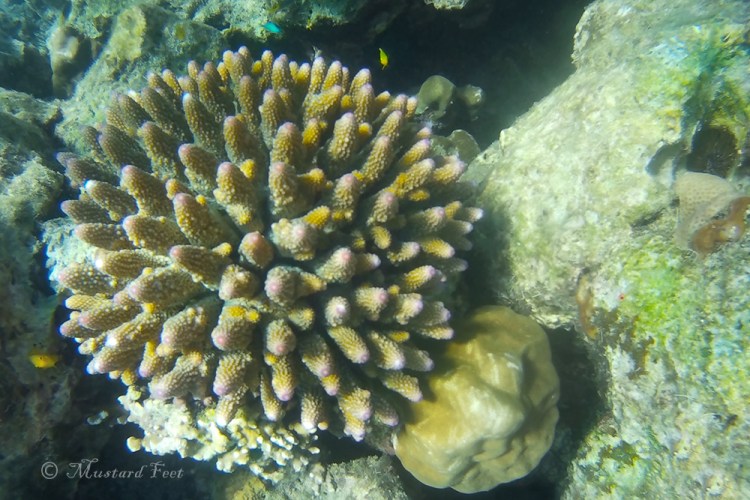
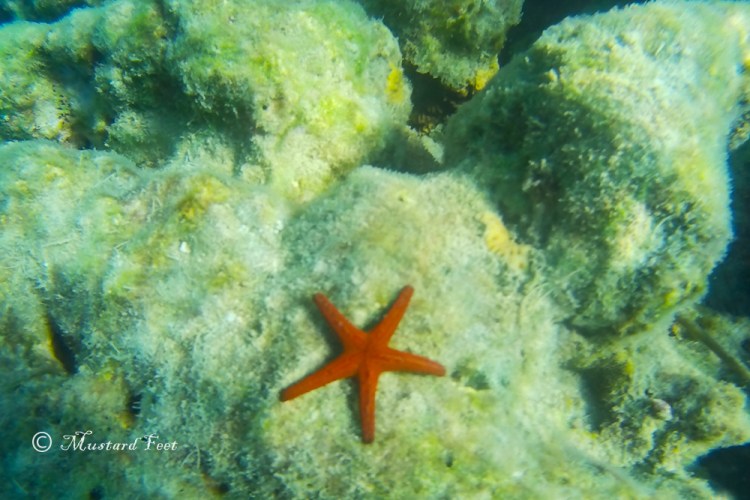
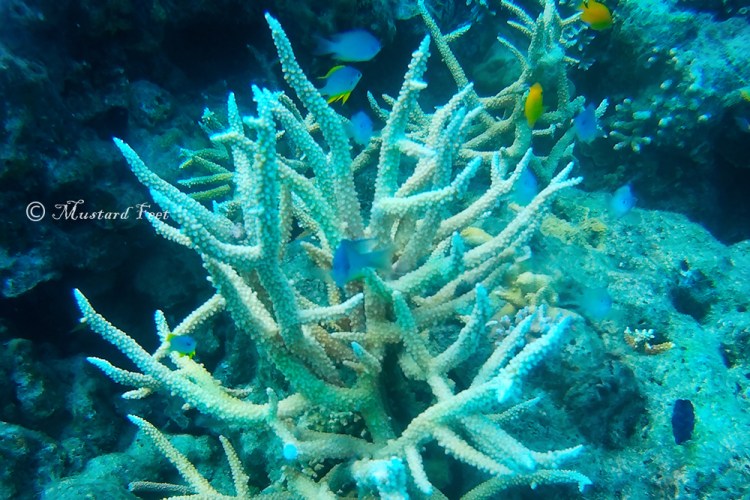
We were doing the snorkelling for the first time and the we enjoyed the experience. We raised our of expectation for next day’s scuba. The sun started to dip and after a walk, we headed back with Tarun. On her way back, we saw a long snake cross our path.
Radhanagar Beach is only 15 minutes scooty ride from the point where the trek starts from the road. Upon reaching we saw the entry area a little crowded, and as we walked in we knew why this beach was regarded as one of the best beaches in Asia. The beach is crescent shaped – guarded by long Mahuwa trees at the back, washed by crystal clean water in the front. 30 seconds walk from the entry area and we found the right amount of seclusion we needed. The sunset from the beach is simply amazing. We just sat there witnessing the dramatic play of colours in the sky.
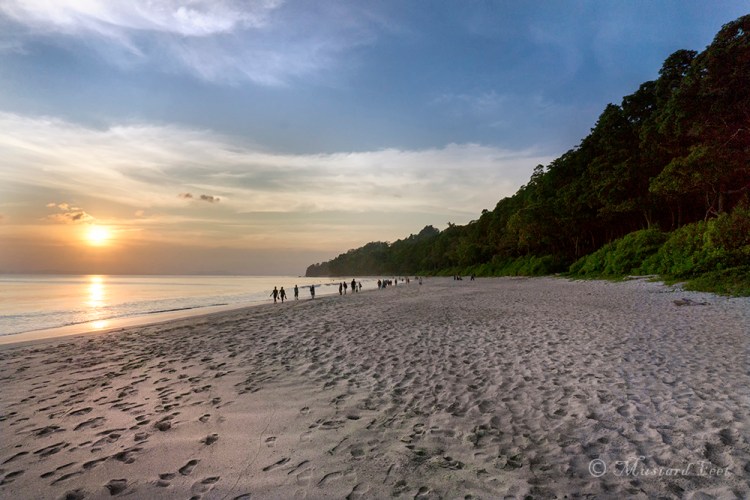
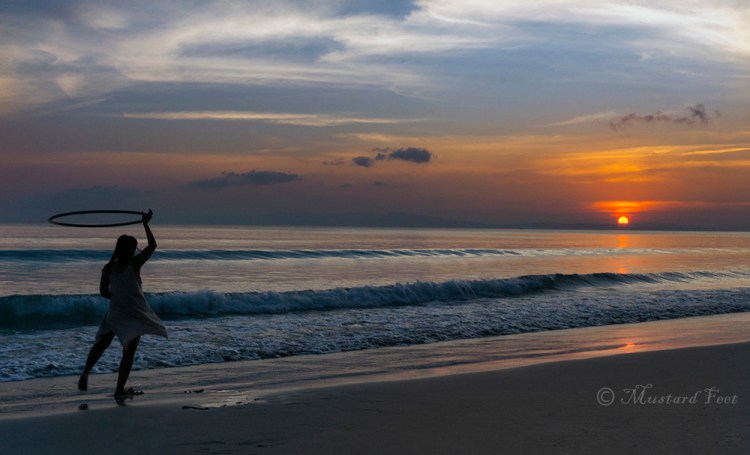
Word of caution – if you plan to spend your time at the beach after sunset, be ready to deal with mosquitoes – a lot of them. Getting a first hand experience we retreated back to the parking area a short while after sunset. There are few shops here selling tea and snacks like samosas, kachoris etc. and mementos – mostly things made from shells.
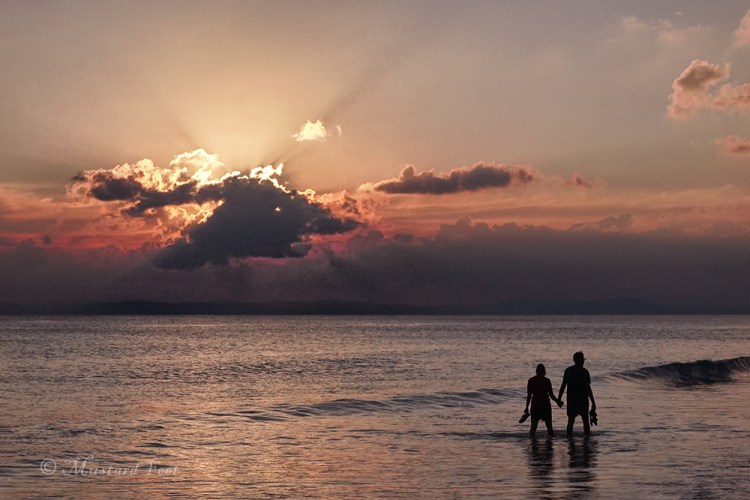
It was day before the new moon and the ride back from the beach was a bit thrilling (and romantic) – a dark road winding through the jungle under a black sky full of stars.
It was a special night at the Red Snapper restaurant – a lady for Germany was churning out great numbers from the DJ desk – the music was quite different but captivating – it’s charm just hoodwinked into our plan of having a quiet evening and compelled almost everyone to start partying. Later we had our dinner at Anju Coco Restaurant. Spacious place with lots of options and good food.
Scuba Time
Early next morning we reported at Andaman Bubble‘s office. We are going to discover how it feels to scuba dive, with them. We first went to their equipment room which is near Kalapathhar beach. There we climbed into the wet-suits and were instructed about the basics of scuba. From there we went to Beach No.2. We saw quite a lot of people from different operators gearing up for the practice sessions. We put on a heavy belt around our waist (which helps you to submerge) and a 18 kg scuba gear, which consisted of the inflatable jacket and the air tank. At the shallows we put on our masks and practice various actions like hand signals, using the regulator, mask de-clogging, using the buoyancy compensating device etc. Apart from us there were two friends from Israel who were diving with Andaman Bubbles. After completing successful practice session, we went down. We found ourselves In a completely different world. Unlike snorkelling, here we were floating with the fish, sometimes flocks of them swimming past us. We went around the coral reef, busy with colourful fish. We saw the zebra fish, pennant fish, clown fish playing hide and seek among corals, coral groupers, surgeon fish, flocks of ray finned fish. We were lucky to see a seahorse and a group of hump-head parrot fish which are not common sightings.
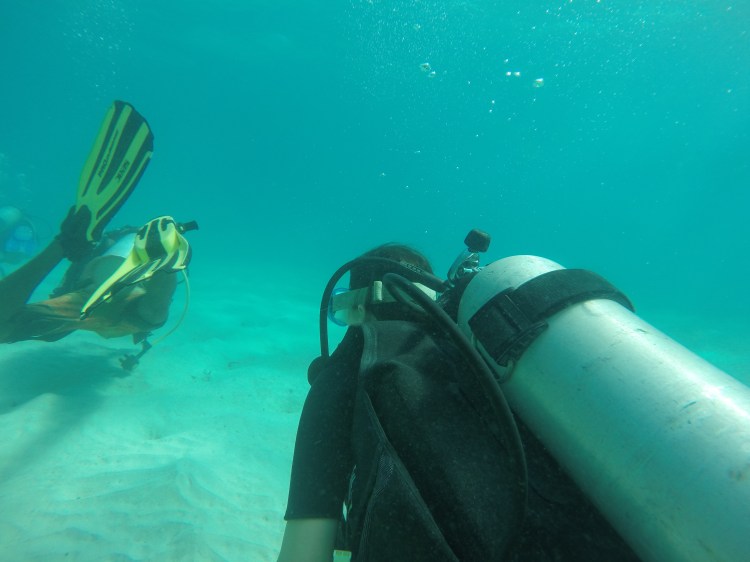
Here are two video clips taken by Mario, one of our instructors. The second clip is of the hump head fish.
It is not the sightings only, the experience was a realization in itself. You actually realize how simple things can be and how easy it is to be alive – you just have keep breathing. When you go under, the stress stays back at the surface. And it is incredibly peaceful down there. Imagine this- a gloriously vastness, no sounds except that of your own breathing, magnificent sights, no technology crowding our existence. Your thoughts are free of mundane reality, and all you can focus on is the beautiful present requesting to be explored.
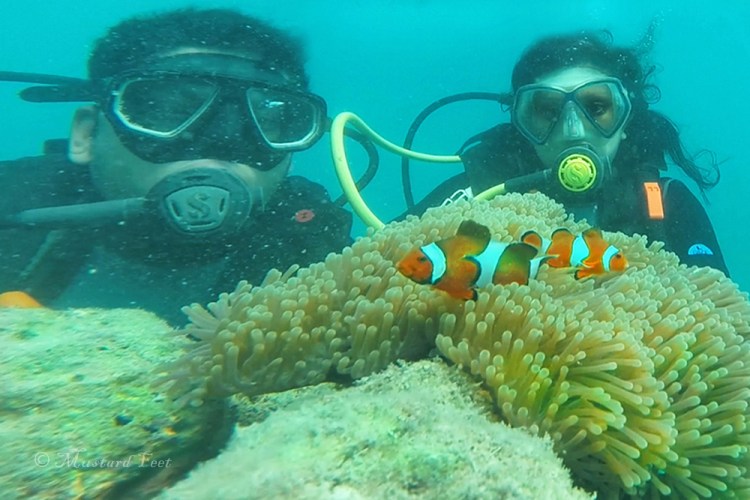
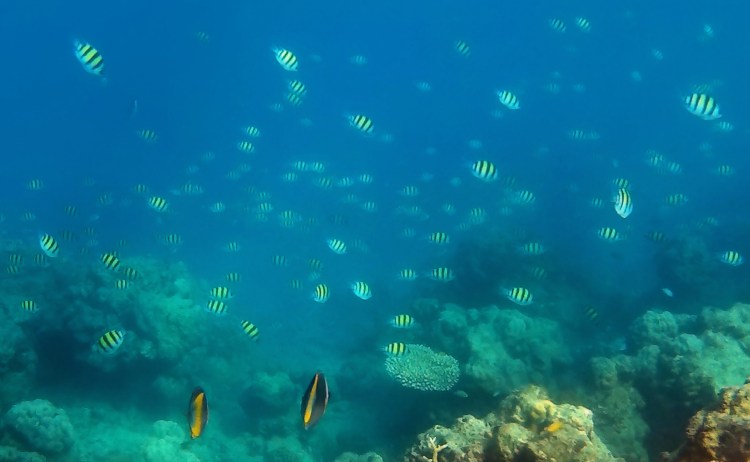
Our post-dive feeling was like that after a session of meditation. Contrary to common believing, diving is not difficult – it is quite liberating. Just breathe and you will be fine and at the end day you will find your doubts have disappeared.
After lunch we went to see Kalapathhar Beach, getting its name from the nearby village of the same name. It lies 4 km from the Vijaynagar Beach. The road to the beach beautiful, like a tropical marine drive. The beach is sandy white, broader than Vijaynagar beach, rocky in nature but exhibiting the same beautiful blue waters like the others. But we did found things littered at the main area – nothing alarming though. South of this beach the road ends after a couple of km and then there is nothing but jungle all around. The entire southern half of the island is a reserve forest.
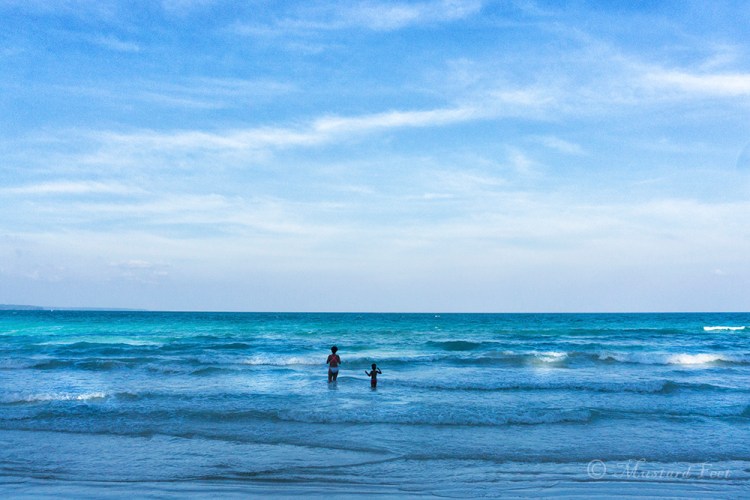
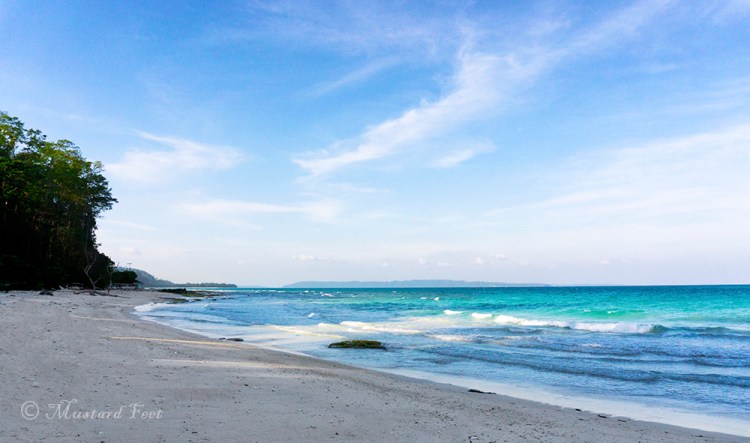
Later we relaxed at Vijaynagar Beach under the shades of trees and witnessed another beautiful sunset at Radhangar in the evening. The island of Havelock is a place to chill and wash away the stress in the beautiful water and the lovely beaches. Set back your pace and enjoy the beauty of the island.
Neil Island
The ride from Havelock to Neil island on the high speed catamaran named Makruzz was eventful. The sea was rough and catamaran was in no mood to sail slowly. As as result, most of the passengers, including myself ended up looking at the sickness bags, instead outside the windows. However, Makruzz is a good looking catamaran with modern interiors. It is fast and you can cut the journey time by at-least 30 minute to 45 minutes by Makruzz. However, it has no open deck.
The rolling in my stomach disappeared abruptly when we dis-embarked at Neil Island. Crystal clear water in different shades of blue. You will definitely want to spend some time in the jetty itself. The blues just draws you in. It was difficult to look away.
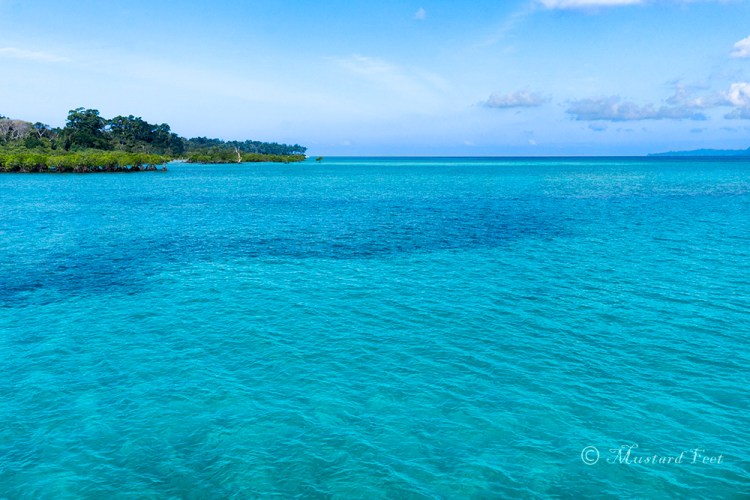
However after sometime we came out of the jetty and found Vijay was waiting for us to take us to our hotel Pearl Park Beach Resort (www.andamanpearlpark.com). The hotel is located in a very good location, right beside Laxmanpur Beach. The cottages are OK – nothing fancy, but as said, you cannot complain about the location.
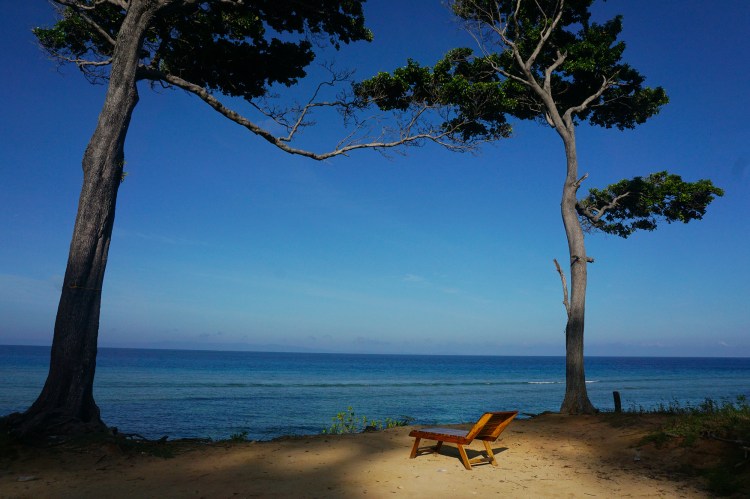
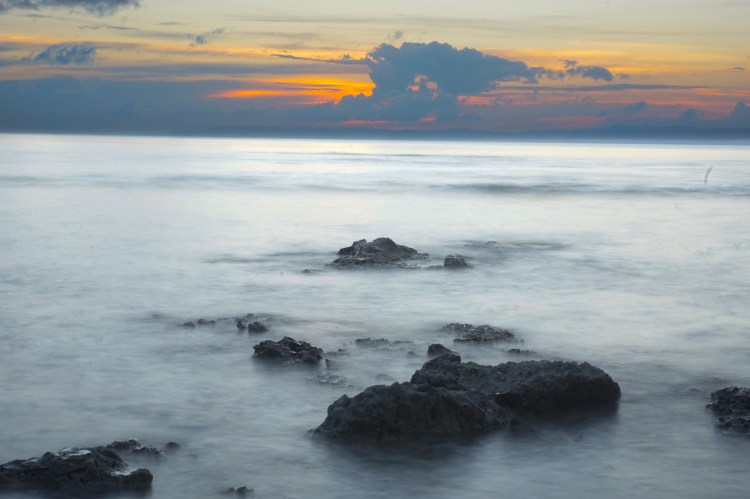
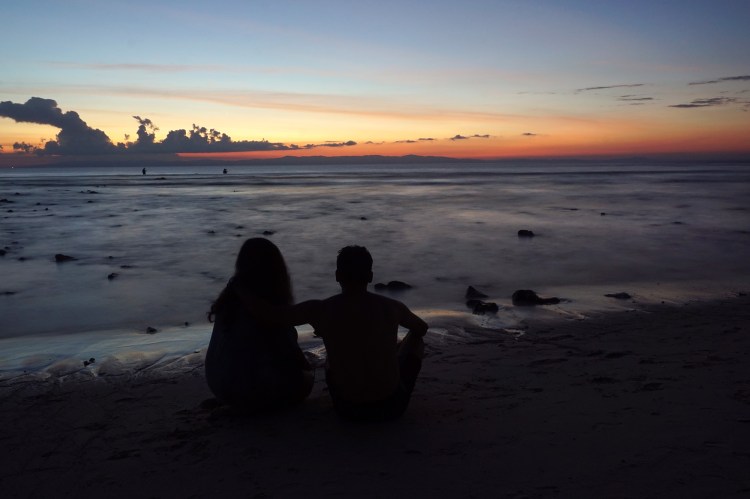
It was almost 1 o clock when we reached the hotel. Being very popular, the hotel gets over-run by tourists and it took almost 15-20 minutes for us to get to our rooms. The lunch was tasty and the short nap in the afternoon was very relaxing. At around 4 in the evening we strolled into the Laxmanpur Beach. This west beach sees a high turnover during the sunset. The beach itself is clean and is located at the western tip of the island. There are few shops selling tea, coffee, snacks and mementos. The water is rocky and full of boulder corals – not suitable for bathing. But the time spent was again very relaxing. Here we befriended a pack of puppies, two of them followed back to our cottage and slept outside the door. The sunset as usual was great and the 5 minute walk back to the hotel in complete darkness was wonderful – you look up and you can see millions of stars against the silhouette of the tall Mahuwa trees.
We did not want to have a heavy dinner and thus seeing a compulsory buffet at the hotel, we decided to dine outside. We asked for an auto-rickshaw at the front desk and waited. Here we met Huzefa and Mariya who have come from Mumbai and were waiting just like us to go out. We cancelled one of the auto-rickshaws and went out together. Moon Shine Restaurant was a descent place and the food was tasty. It is always nice to make new friends and it was an evening of chit-chats. Huzefa and Mariya were leaving the very next day but we met again at the airport.
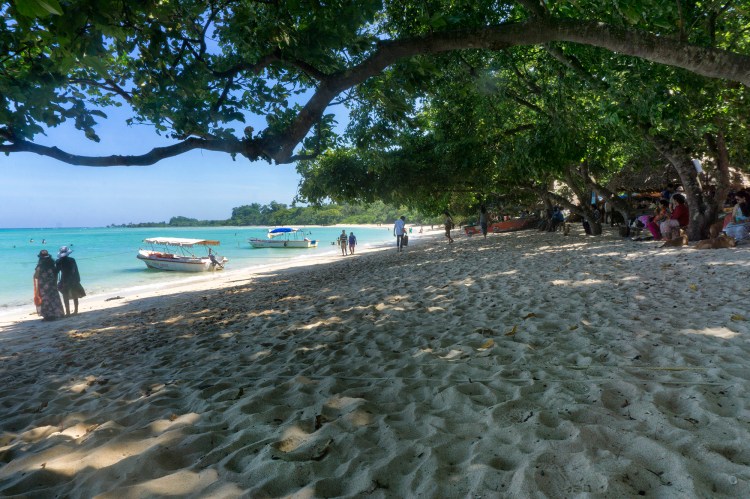
The following morning we went to Bharatpur Beach. The beach near the jetty and extends to the west. This beach is very popular – quite a number of people enjoying and many stalls at the back. The entire beach is shaded by trees making it ideal to visit at anytime of the day. One can hire a boat and take a ride or try jet ski too at this beach. All in all this is very lively beach with characteristics amazing blue waters.
(If you are willing to rise early, you can visit the Sitapur beach during sunrise. We heard it is very beautiful out there but opted out at the end)
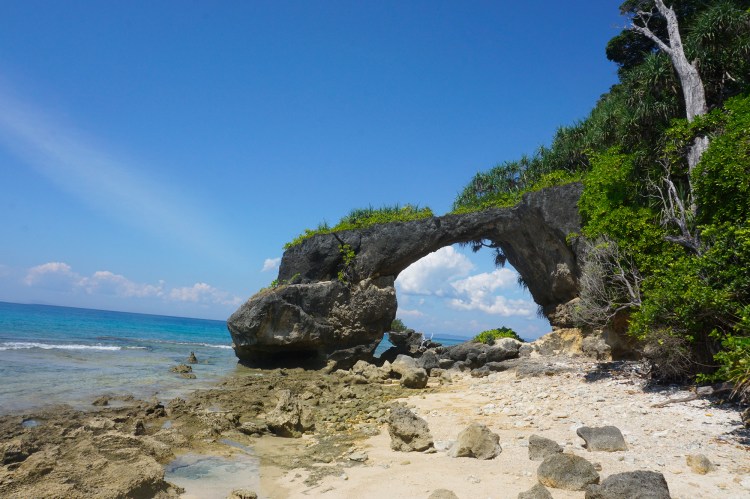
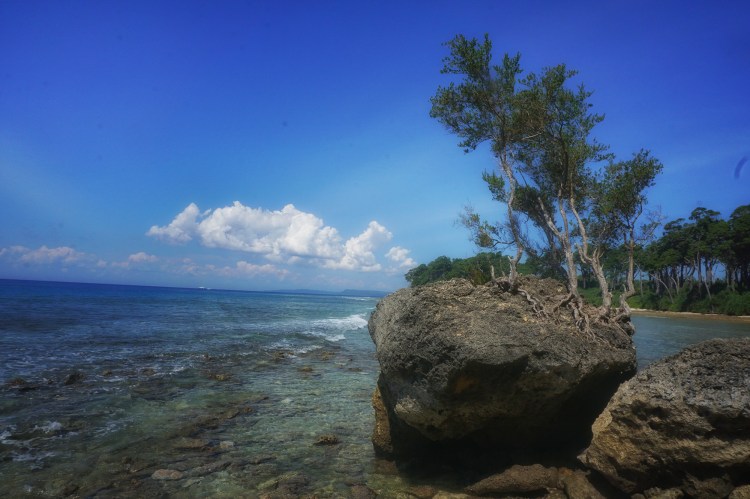
Tide was receding and we made our way to see the Natural Bridge – a rock formation which looks like a bridge – and we wanted to go and come back before the place gets crowded. Its located on the northern side of the island. The way to the spot is rocky – slippers are no recommended. After the water receded one can sea quite a bit of corals and life forms like sea cucumber, sea anemone etc. But people are often irresponsible and without proper observation the corals may get damaged severely soon. We sat down at a corner under the rocks and spent some time. Our driver had gone to pick someone at the jetty. After he came back, we returned to hotel for lunch.
The evening was spent again at the Laxmanpur Beach with another beautiful sunset. Played with a frisbee, played with the dogs, went for a quick bath, did some yoga, drank coconut water and lazed on.
That night, it was again a compulsory buffet at the hotel and being the last night, we wanted something nicer. We hired a auto-rickshaw, went to Sea-Shell Hotel and congratulated ourselves on our trip with drinks and sea-food.
Next morning we sailed to Port Blair in the morning on the government-run ferry. The ride was comfortable. In Port Blair we had some time which we spent shopping and de-clamping crabs during lunch at the Lighthouse Restaurant. We met with Huzefa and Mariya at the airport, who were flying back to Mumbai and then waited for the announcement for boarding our flight and marking the end of a lovely trip to Andaman Islands.
Havelock : Things to do –
- Watch the Sunset at Radhanagar Beach. Take a swim during sunset.
- Trek early morning or post lunch (to avoid crowd) to Elephanta Beach
- Take a early morning stroll and relax at Vijaynagar Beach
- Try Scuba Diving
- Go for snorkelling at Elephanta Beach or Turtle Beach or at Inglish Island
- Hire a scooty
- Eat fresh seafood
- Unwind
Havelock : Where to eat –
- Red Snapper restaurant (Wild Orchid Hotel)
- Full Moon Cafe
- Anju Coco
- Fat Martin
Havelock : Scuba Diving –
- Andaman Bubbles
- Barefoot Scuba
- Dive India
Neil Island : Things to do –
- Relax and watch sunset at Laxmanpur Beach
- Enjoy a stroll, take a bath, try jet ski or bargain at local shops at Bharatpur Beach
- Try scuba diving
- Visit the natural bridge
- Enjoy sunrise at Sitapur beach
- Unwind
Neil Island : Scuba Diving –
- Dive India
 Mustard Feet's Journeys
Leave a comment