
It was always a dream (rüya in turkish) to visit this magnificent city. So, when our plane from Athens touched down at Ataturk Airport at noon, our excitement flew high with our dream coming true. We disembarked with an extra smile on our face and as we already had our e-visas, we were outside the airport arrival gate without much delay. We took a taxi and were on our way to our hotel in Sultanahmet.
Day 1
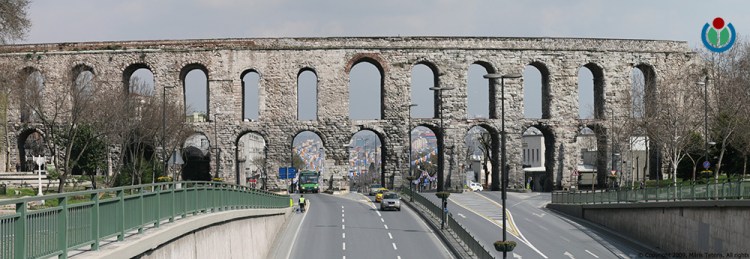
As we left the airport, we found the streets to be broad & modern; so were the buildings around it – a sight that we did not have in our mind about Istanbul. But then we saw the Valen’s Aquaduct and knew we are approaching the old city. Completed by Emperor Valens in 368 AD., this sturdy Roman aqueduct helped bring water in from as far as 12 miles away. The two story, arched structure was instrumental in filling the city’s underground cisterns which not only helped Constantinople to grow, but also protected it in times of drought. Soon the roads became narrow, the building’s facade lost their modern outlook and the minarets stood tall behind them. Our taxi turned on to cobblestone lane and after a short quivering ride, stopped in front of our hotel.
We found our Apricot Hotel to be a quaint beautiful place, located only a 6-7 minutes walk away from the Sultanahmet Square, Blue Mosque and Hagia Sophia. The cosy rooms with the ottoman furniture added to the feel of the place.
While visiting Istanbul, my personal recommendation is to stay in the old city, near to Sultanahmet Square. It is a complete different atmosphere over here and you can get the feel of the local culture and colours 24×7.
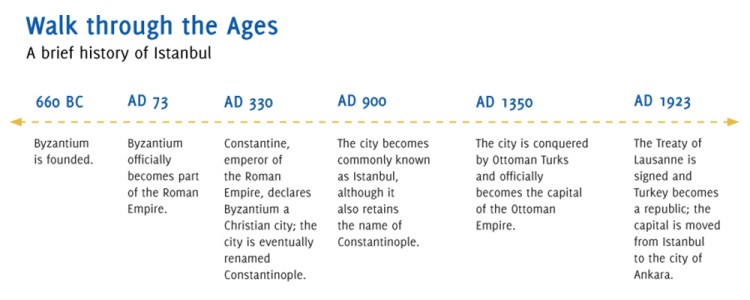
Soon we stepped out to experience the city. Enjoyed our lunch in a nearby place called Cozy Garden Restaurant and went for Turkish bath at Cağaloğlu Hamam. Do not miss the opportunity to miss visiting a hamam. It is an experience all together. And remember it is not a pampering activity – the main element of turkish bath is exfoliation. But it revitalizes you. So being refreshed totally, we reached the Sultanahmet Square. An open green square adorned with two staggering architecture on its two side – Blue Mosque at one end and Hagia Sophia at the other. The square has a great historic significant, it was once a hippodrome, meaning its was the sporting and social center of Constantinople. As you may know Istanbul is not the original name of this historic city. The city dates back to 600 BC when it was called Byzantium – at the time it was founded the Greeks. Around 330 CE it was made the eastern capital of the Roman Empire by Constantine and named Constantinople. The city was captured by the Ottomans in 1453 who ruled for the next 400 years. The name Istanbul was made official only in 19th century.
Today the monuments like Serpent Coloumn, Walled Obelisk stand witness to that history. Sultanahmet Sqaure today is a cosmopolitan sqaure. People from all around the globe can be seen here. The locals come here to spend time with their family and friends, we the travelers – who came here for the first time – keep admiring the place, the traders are busy trying to sell snacks and mementos – all in all a place to soak up the sun while watching the grandeur of the city and its people.
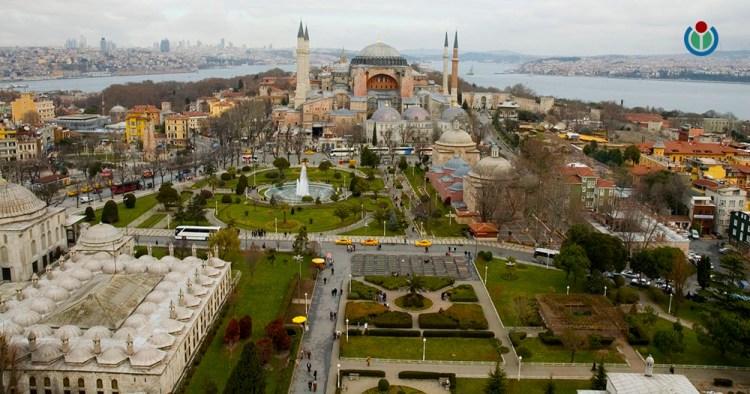
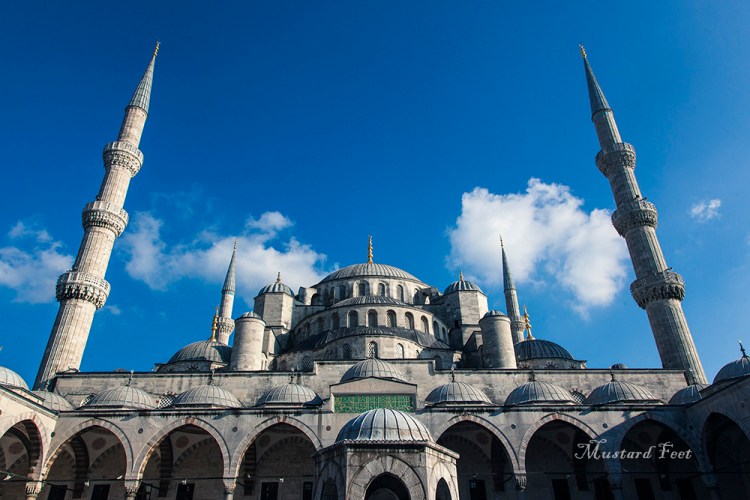
We proceeded towards Blue Mosque. It is so named because of the blue tiles it is made up of. The particular bluish tiles are from Iznik. It was built between 1609 AD-1616 AD during the rule of Ahmed I. Being a real mosque, admission is completely free. However if you reach the place during prayer time, be ready to wait for half and hour. The architecture of Blue Mosque very interesting. It has both the elements of an Ottoman mosque and a Byzantine church. There are several ways to enter the grounds, but to fully appreciate the architectural symmetry and grandeur you should use the south gate from the Hippodrome. Once in the courtyard, look up and enjoy the beautiful stepped architecture of the mosque. Also look for an interesting family tree depicting the ties between the prominent figures in Christianity and Islam.
Blue Mosque has 6 minarets – this was very important at the time of its construction. Importance of a mosque is judged by the number of minarets and at that period, only the highest mosque in the world – the mosque of Mecca had 6 minarets. Thus it was very controversial decision that another mosque in Istanbul will have the same number of minarets. Sultan Ahmed solved the problem by simply adding another minaret to the mosque in Mecca.
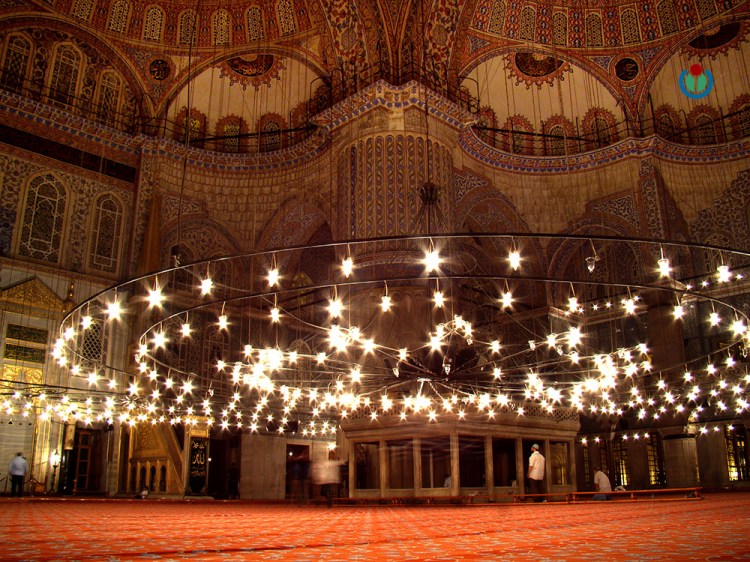
Visitors are allowed to enter the mosque hall from the western gate. Being a mosque, you need have your head and legs covered. However head wraps and waist wraps are available just outside the entrance of the mosque. You have to remove your shoes and keep them in a plastic bag, which are also supplied at the same place. And once you step inside, be amazed by the incredible colours and flamboyant designs. Take your time. Sit down on the carpet. Let your eyes feast on one of the most beautiful sight of the world. Take a deep breath. Feel your minuscule existence under the huge cascading domes. Keep gazing at those intricately decorated tiles.
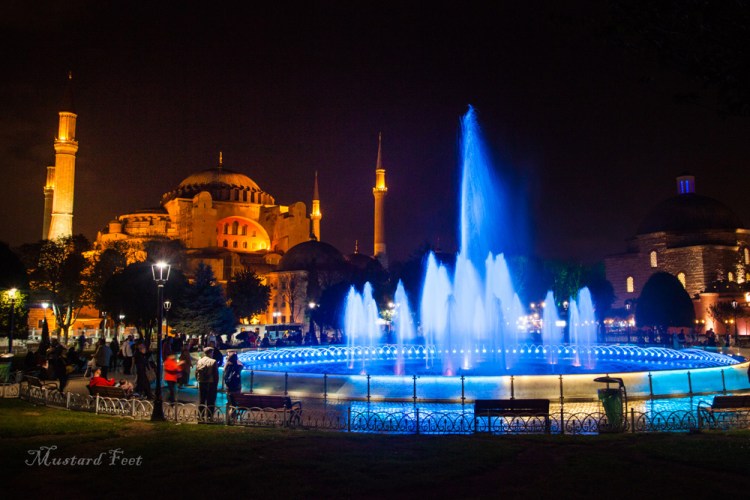
Afterwards we went back to Sultanahmet Square at spent some time there. We bought some Kestane – roasted chestnuts, and chatted away. The place looked really magical – one should really take a stroll or spend some time here after sunset with the mosques lit up and the colorful fountains dancing all around the place.
If you want to sip some hot coffee with a beautiful rooftop view of the mosques, we will recommend the nearby Sofa Cafe.
That night, we had our dinner at Old Ottoman Cafe and Restaurant. Highly recommended to have delicious Turkish food. The smokey hünkar beğendi, grilled fish and the fig syrup in ice-cream just got us to new highs.
Day 2
Next morning, we started early. After a quick breakfast, walked down to Sultanahmet tram stop, took a tram and got down at Gulhane and took a walk down the beautiful Gulhane Park. It is a colourful garden, perfect place to start your day. Go here early to beat the crowd.
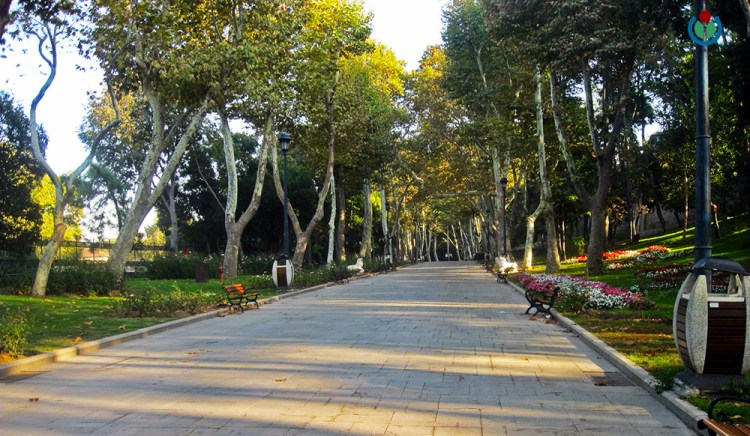
After a walk, which stirred our sleepy bones, we reached the gates of Topkapi Palace. This grand and sprawling palace was the home to Ottoman sultans for 400 years (1453-1853) and a place to ogle at the opulence of the royals. Be sure to get the audio guide and get ready to travel back in time at this place. From the Gate of Salutation, to the divan, the treasuries, to the Harem rooms, this grand palace demands at-least 3 hours of your time. You are surely to lose track of time as you will stroll from one courtyard to another, from one grand hall to another.
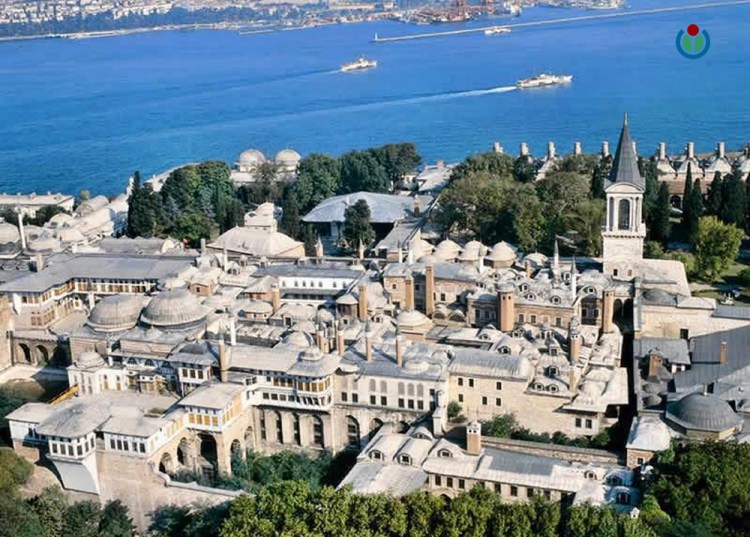
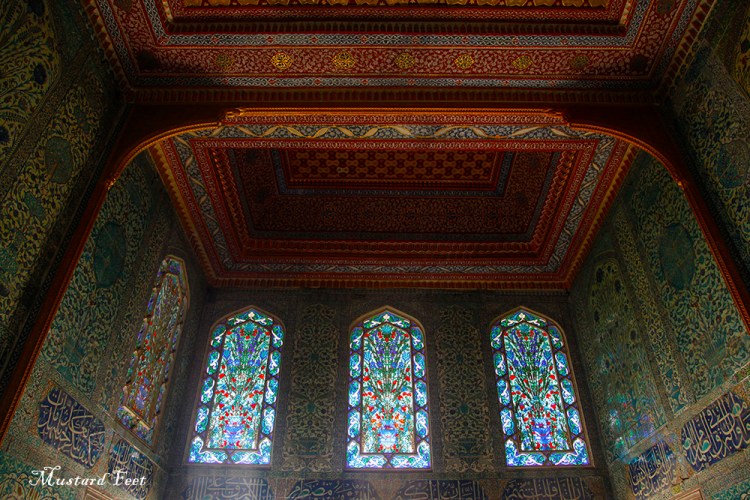
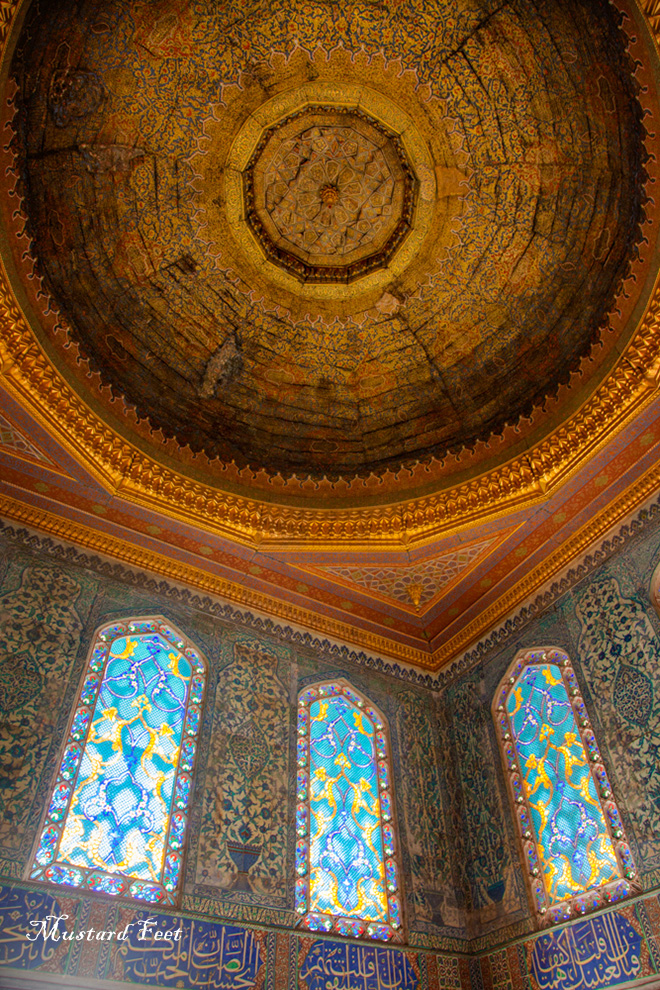
Do not miss the harem section of the palace. The Harem is the private living apartments of the sultan. This particular Harem contains over 400 rooms that also served as living quarters for the sultan’s mother, his concubines and wives, and the rest of his family including his children and their servants. Opulent rooms covered with brightly colored tiles, lavish fabrics, and gold-plated ceilings. Around every corner was a new room with a totally different array of colors and patterns, all of which were commanding and fitting of a sultan’s living quarters.
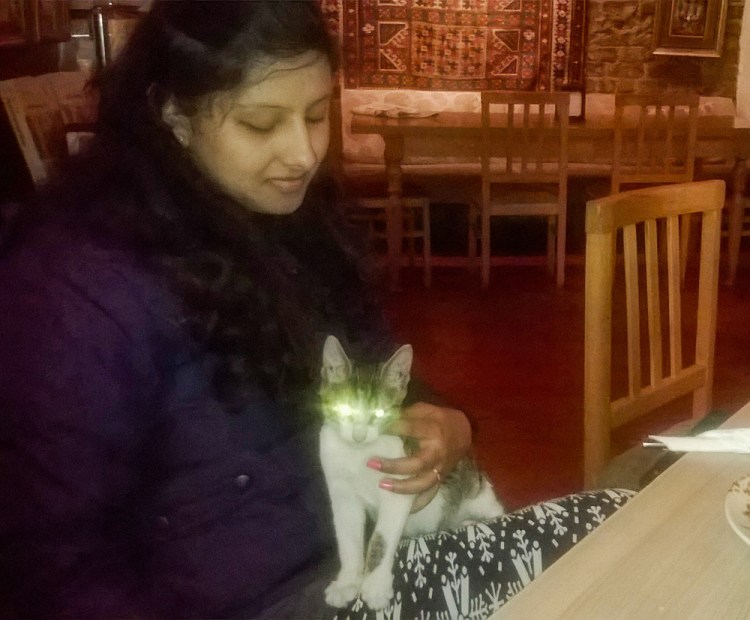
After this heavy sight seeing, we walked back among narrow back roads with old houses on both sides and had a wonderful lunch at Giritli, where the food reminded us of the country we visited earlier, Greece. The menu was fixed but was delicious right from the meze to the desserts along with wine. And on top of that we got a great company of feline friends. Yes, think of Istanbul, think cats. They are everywhere, particularly in the old city. We both love cats and thus enjoyed their presence.
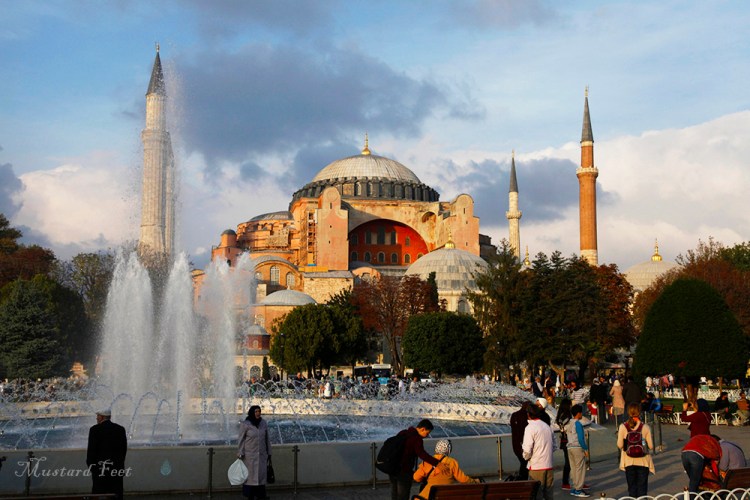
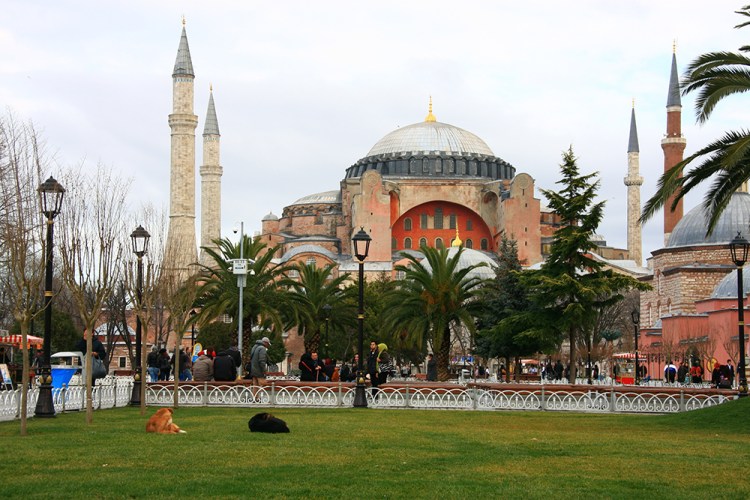
Hagia Sophia (Aya-sofya in Turkish) was our next stop. A great architectural beauty and an important monument both for Byzantine and for Ottoman Empires. Once a church, later a mosque, and now a museum at the Turkish Republic, Hagia Sophia has always been the precious of its time. The mystical city Istanbul hosted many civilizations since centuries, of which Byzantium and Ottoman Empires were both the most famous ones. The city today carries the characteristics of these two different cultures and surely Hagia Sophia is a perfect synthesis where one can observe both Ottoman and Byzantium effects under one great dome. Again, be sure to pick up an audio guide and start the journey inside Hagia Sophia.
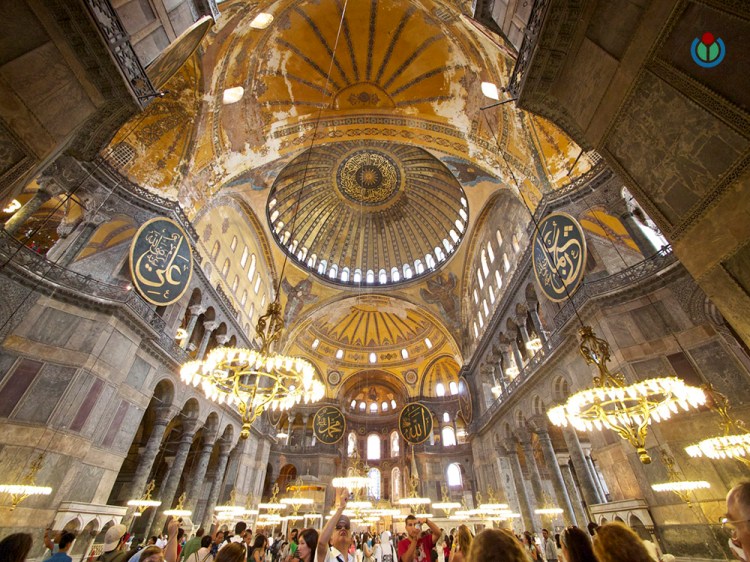
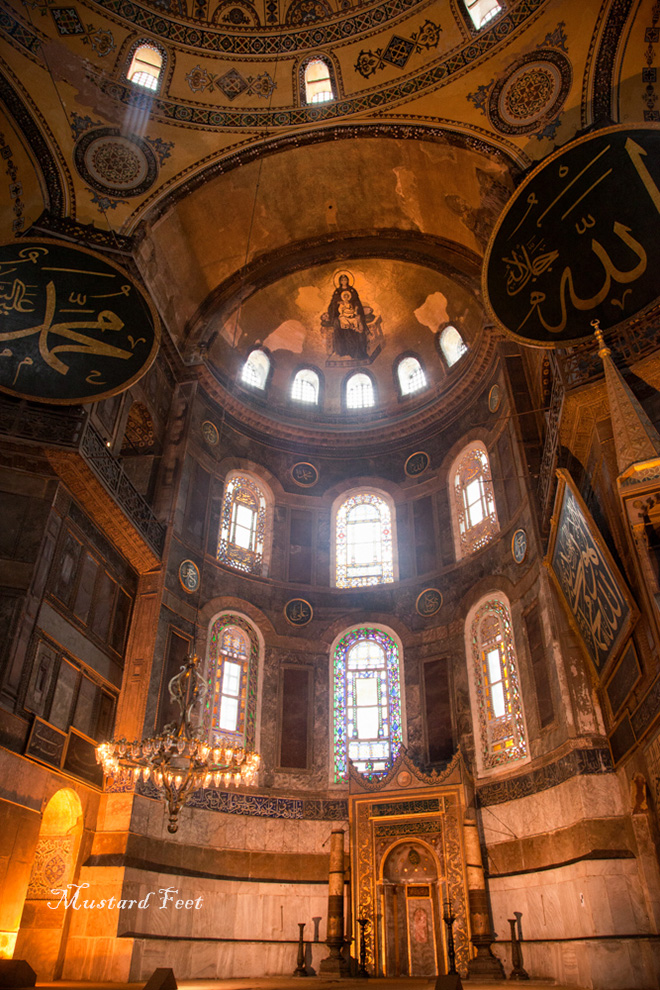
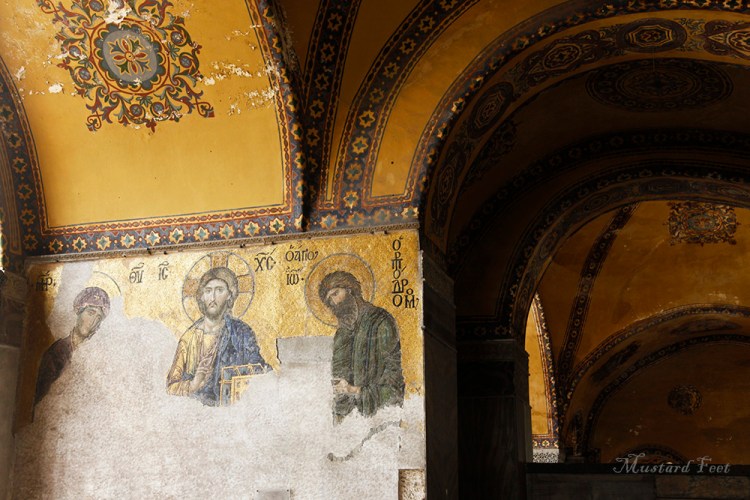
You can’t help but be taken aback by the cavernous space beneath the mighty dome, once you enter the hall. On this second level you will find the best of the mosaics, and from the south facing windows there is a little known, but beautiful view across to the Blue Mosque. There are over 30 million mosaic tiles in Hagia Sophia, which has kept the restoration teams busy for nearly a century.
After soaking up as much history as we can, we crossed the road and found ourselves in from the small ticket counter of Basilica Cistern. Climb down the stairs and witness an engineering marvel with the weight of the city above supported by a complex network of arches. It was built in 532AD by Byzantine Emperor Justinianus, and can hold 27 million gallons of water. Apart from the incredible sight, the Cistern’s main attraction are the two columns with massive Medusa heads as column bases.
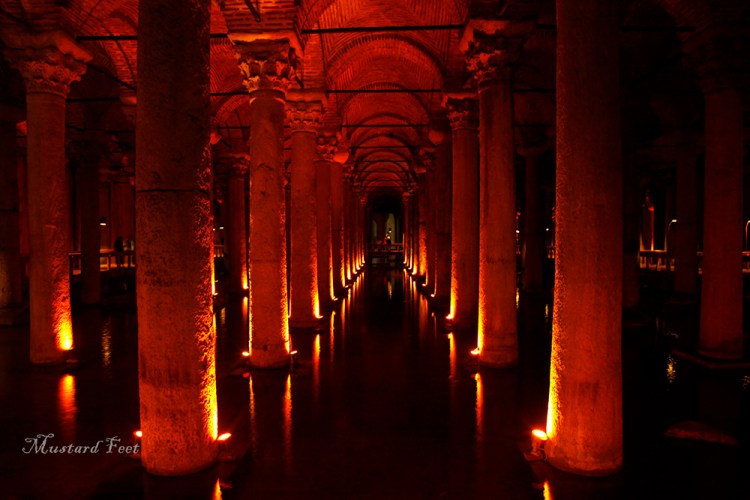
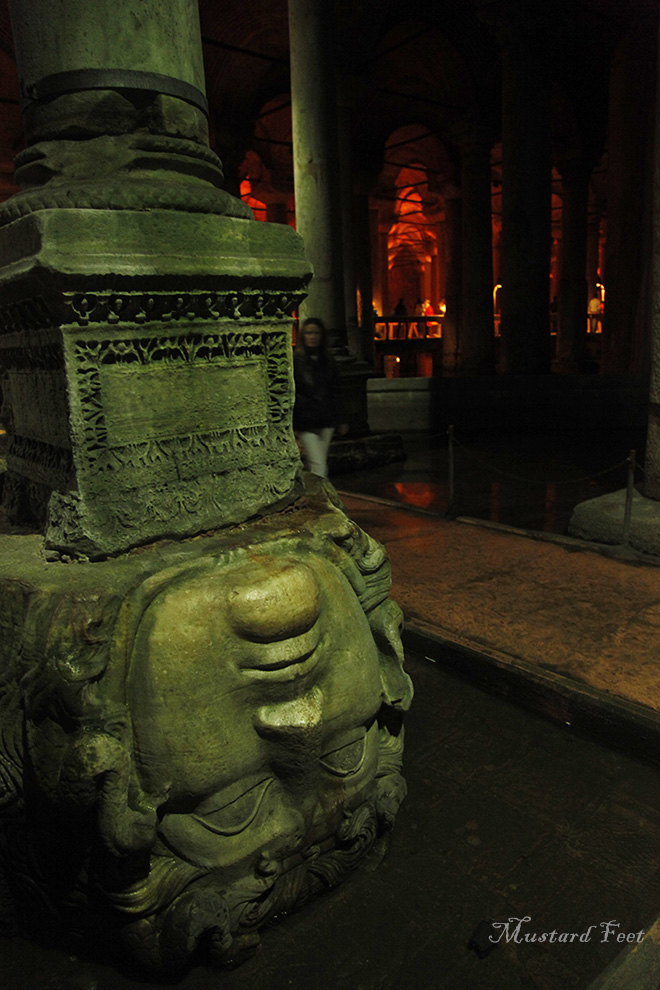
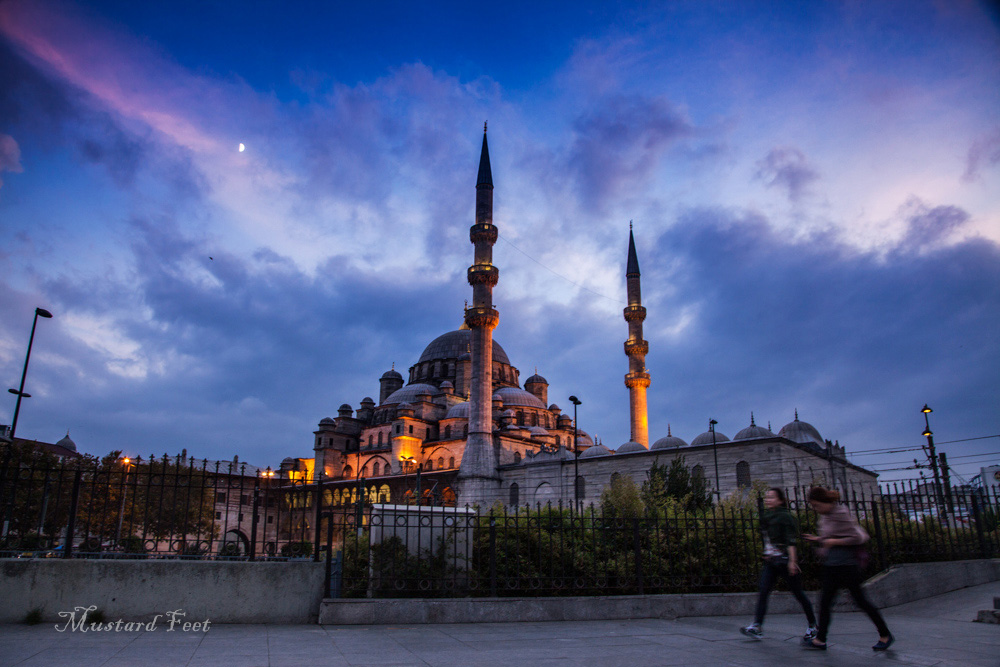
After emerging from the underground, we took tram and got down at Sirkesi tram stop. From there we did a quick tour of the New Mosque. This is an imperial mosque situated at the Golden Horn at the southern side of Galata Bridge. The mosque has 66 domes and like all other mosques a grand exterior and a beautiful interior.
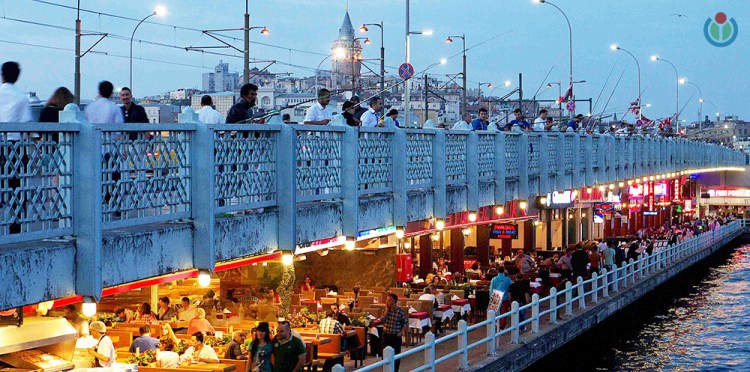
Afterwards we strolled down the Galata Bridge during sunset amidst shrieking seagulls and vendors selling everything from breads, fruits to copy watch. The bridge was also full of hopeful anglers trailing their lines and having a smoke. The bridge was symbolic connection between the royal province of Sultanahmet and the commoner’s provinces like Karakoy and Beyoglu, which are now the face of modern Istanbul.
We paid a visit to the underbelly of the bridge, full of cafes and fish food restaurants. We had some snacks, a fish sandwich and some coffee from Osmanli Balikçisi, and walked towards the Galata Tower.
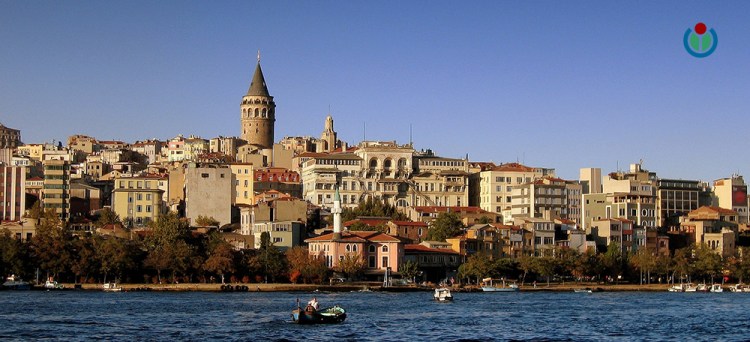
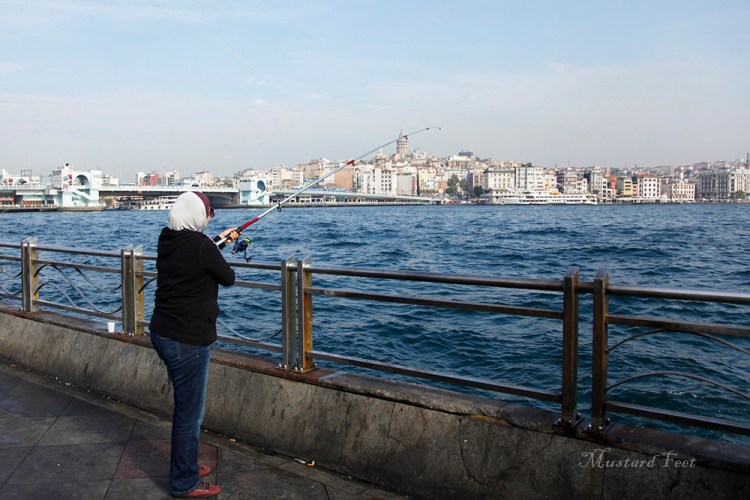
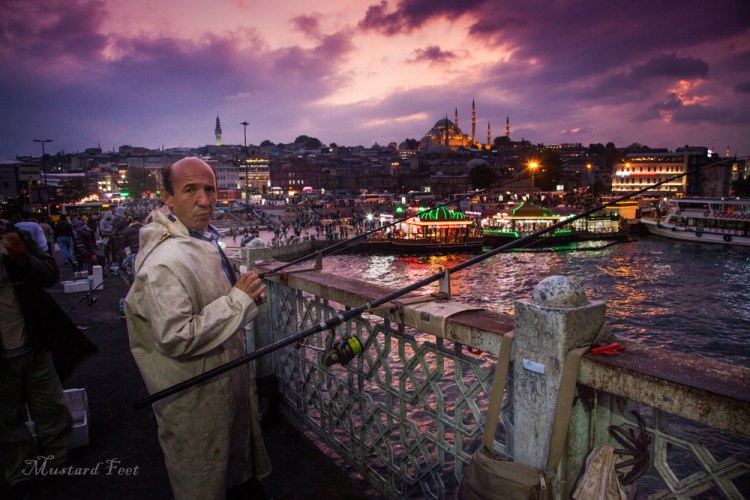
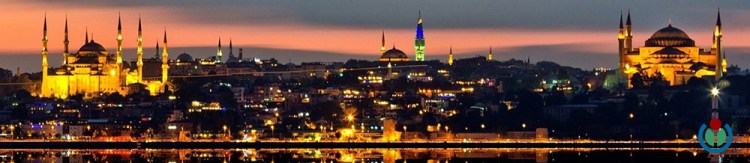
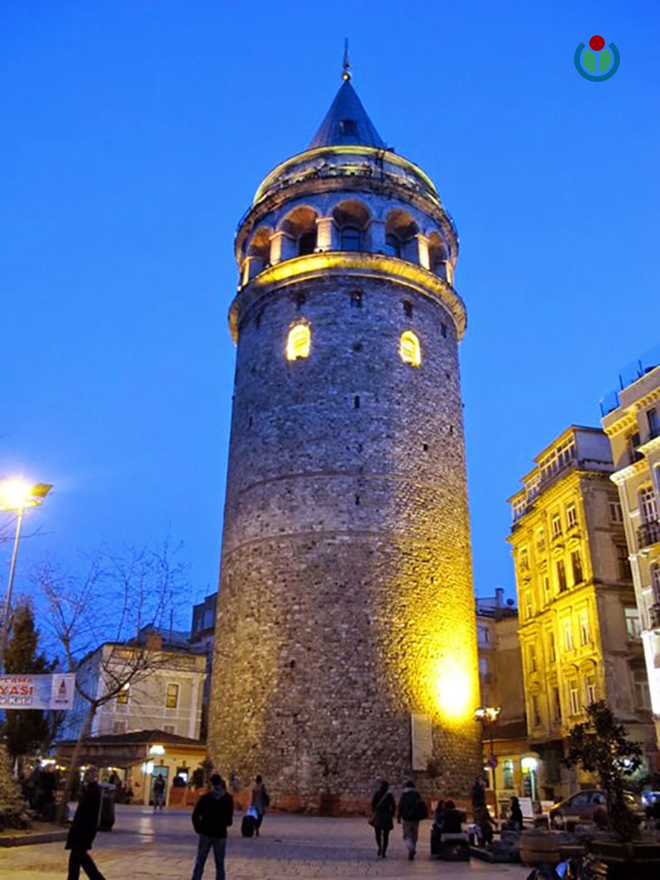
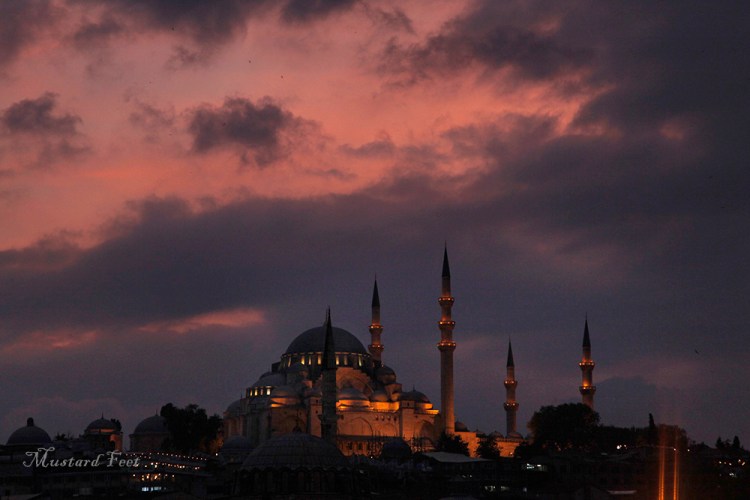
Galata Tower is a medieval stone tower at the northern end of the Galata Bridge. This 60 meter tall striking landmark offers panoramic vista of the historic peninsula. Before going to the tower pay a quick glance to the shops selling fish at the northern end of the bridge to get a feel of the local culture of the city. From the top of the tower the view was mesmerizing. As the sun dipped, the mosques and palaces across the Bosporus turned silhouettes against a red and pink dusk. It was very a very romantic sight.
Next, we joined the stream of local commuters heading towards the main ferry dock on the eastern side of the Galata Bridge and then head around the corner to the city’s most famous purveyor of baklava, Karaköy Güllüoğlu. To see what all the fuss is about, order a porsiyon (portion) of fıstıklı (pistachio) baklava with a side of kaymak (decadently rich clotted cream). Locals wouldn’t dream of enjoying this without a glass of tea to cut the sweetness, so we did the same.
If you are jazz enthusiast, pay a visit to the Nardis Jazz Club near the tower.
We finally took a tram and returned to our hotel and after a little chit-chat and a call back to home, we set out to have dinner at Cafe Rumist. Brilliant food. The hot pot clay kebabs is to die for. And do not forget the Turkish tea at the end. We took a stroll to help our body digest the wholesome dinner and retired for the night. Our feline friends came to greet us again.
If you want to have an idea about the hot pot clay kebab – watch the video. You can get the same in Old Ottoman Cafe – where it is called testi kebab.
Day 3
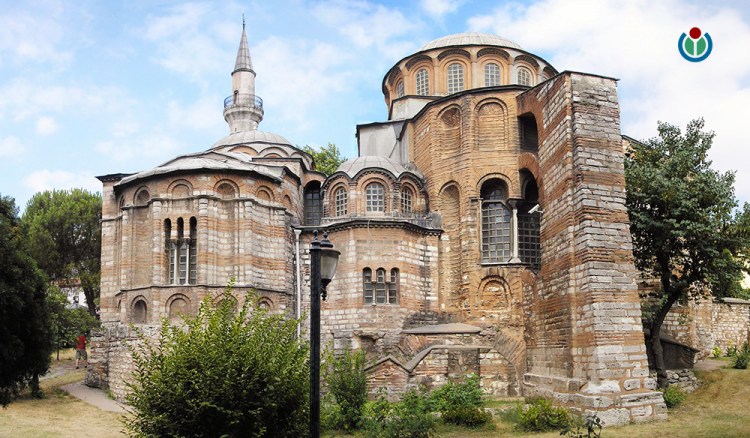
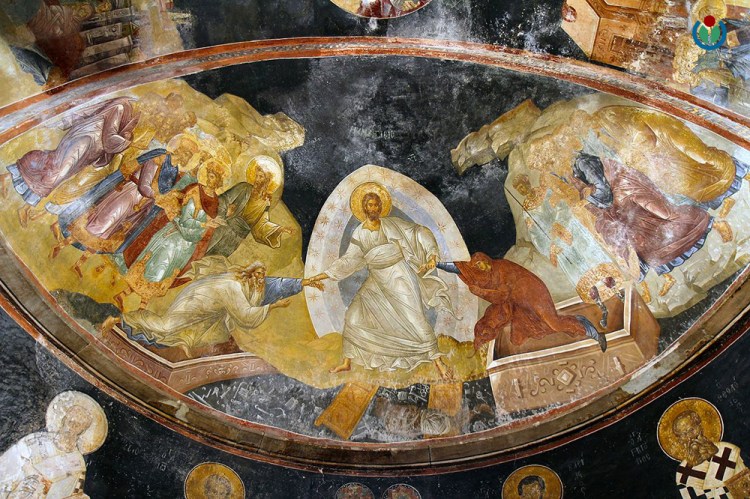
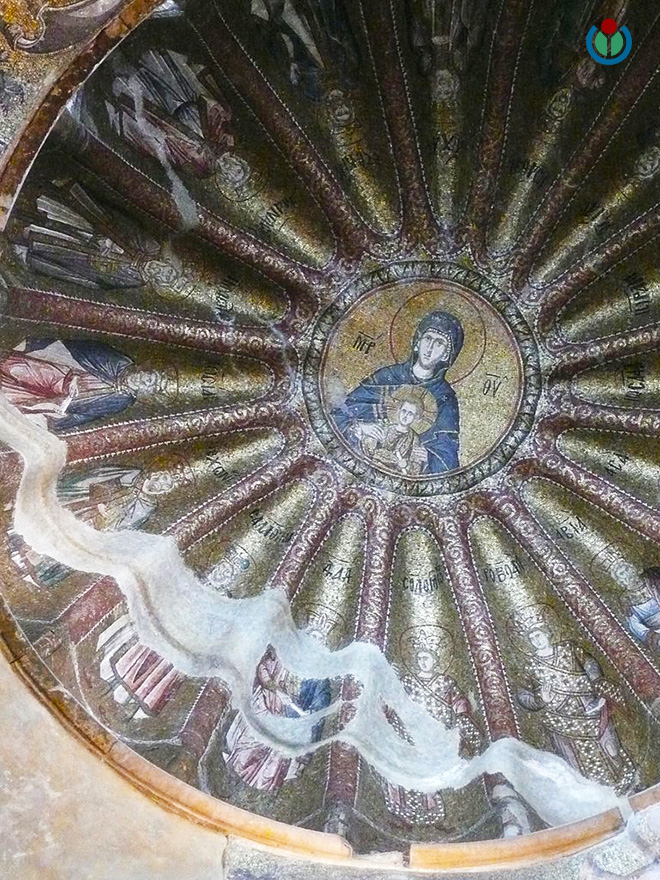
Today we had breakfast from the local stalls at the Sultanahmet and it was lovely. Then we reached Chora Church, known for its amazing mosaics. Even after the Ottomans conquered the city in 1453, it continued to serve as a Christian Church for almost 60 more years until being turned into a mosque in 1511. Chora Church remained a mosque through the Ottoman Empire and into the modern times until being converted into a museum in 1945. During an initial 13 year restoration, the thick layer of plaster on the walls was removed uncovering the hidden treasure of the 14th Century mosaics and frescoes. Some were damaged, but you’ll be amazed at how well preserved, beautiful, and detailed the over 50 remaining mosaics and frescoes are.
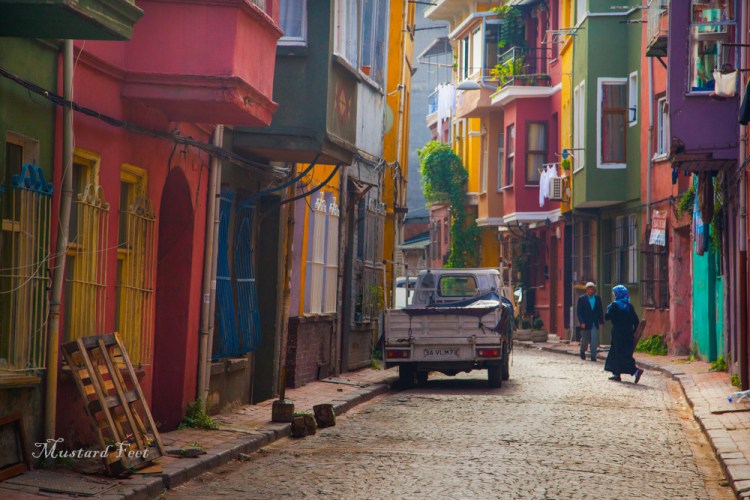
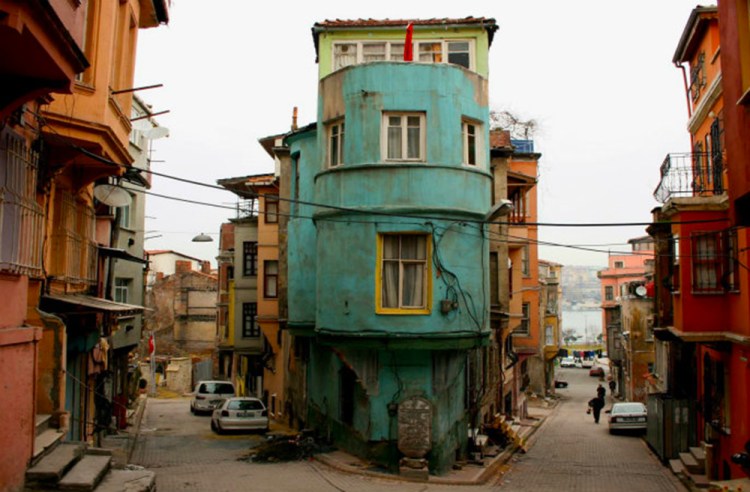
Next stop – the different, beautiful and colourful jews neighbourhood of Balat. This neighborhood was the primary home to Istanbul’s Jewish community from the 1400s through the early 1900s. The biggest influx came when 200,000 Jews were kicked out Spain when Christian rulers took over in 1492 and expelled them. Spain’s Moorish rulers had previously let the Jews live freely and the Ottomans followed suit opening welcoming the them to further establish the Balat neighborhood. The area quickly grew and at one point the area held almost 20 Synagogues, although only a couple still remain. The heyday of Balat was the 1600-1800s when Jewish merchants built up every square inch of the neighborhood into a tightly fitting labyrinth of streets that became known as Balat. We around the narrow colourful lanes before landing up in the Fener Greek neighbourhood. The Fener neighborhood feels a lot like Balat but with Greek instead of Jewish origins. We walked and found the coveted blue corner.
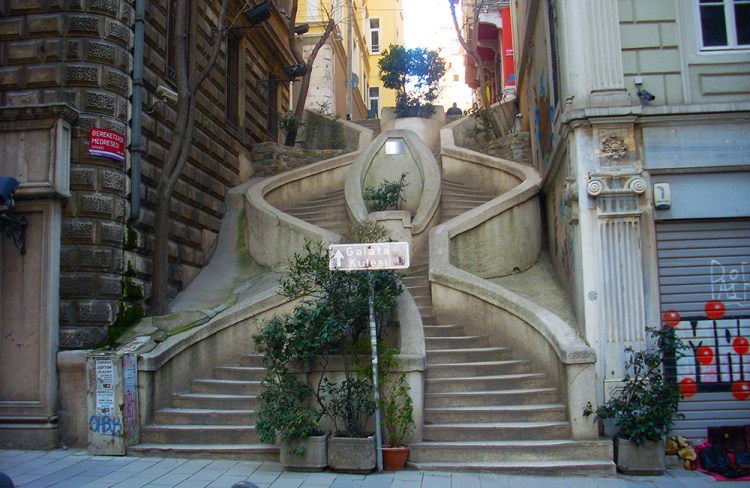
From Fener, we took a bus and again reached Galata bridge. We went to see the famous Kamondo Stairs which we forgot the previous day. This decant twisting staircase case is a master piece of architect many Avram Camondo. And not to forget the famous photo by Henri Cartier Bresson.
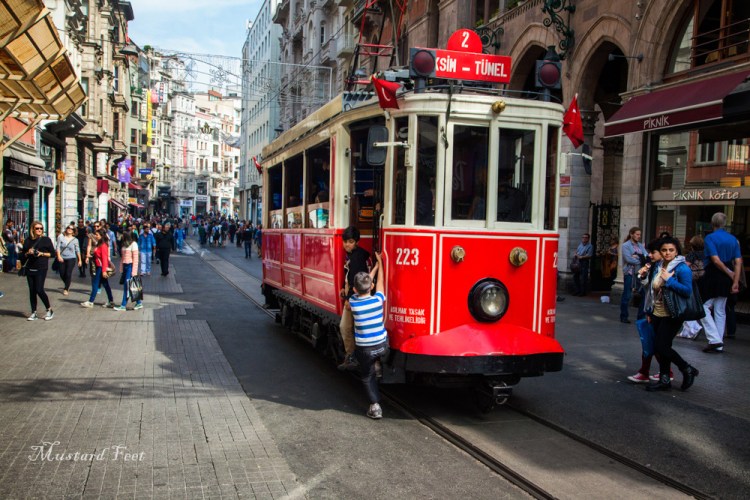
From here we walked back and took the funicular from Karakoy tunnel station, which is located on the Galata tower side and stepped on to İstiklal Caddesi. This 1-mile long avenue is very pedestrian friendly, but we took the Historic Red Tram for the first half mile. The street is very European in nature with branded shops and outlets all along.
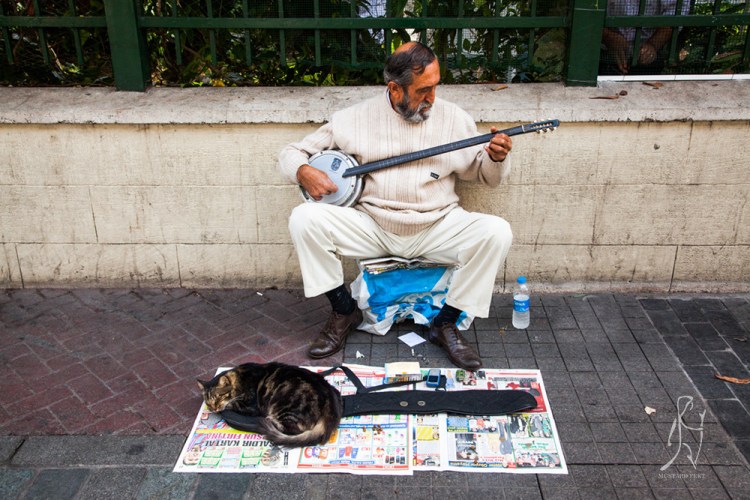
We had our outdoor lunch at the colourful and cosy French Street. This is a super cute place to be. The atmosphere is always great with light background music playing on speakers all over, art galleries and street musicians.
What we understood that Istanbul has two sides – a slow, traditional one and another a fast, modern one and the Galata Bridge acts like the boundary to these two sides. The Sultanhmet, Fatih, Balat, Fener etc on the south side of Golden Horn are the slow, easy ones. The districts to the north of Golden Horn, such as Kadakoy, Beyoglu etc are the fast paced ones with modern outlook. One more interesting fact is, geographically, the city itself is shared by both Europe and Asia. Once you cross the Bosphorus from west to east, you are in Asia! There is even a yellow board to saying “Welcome to Asia”.
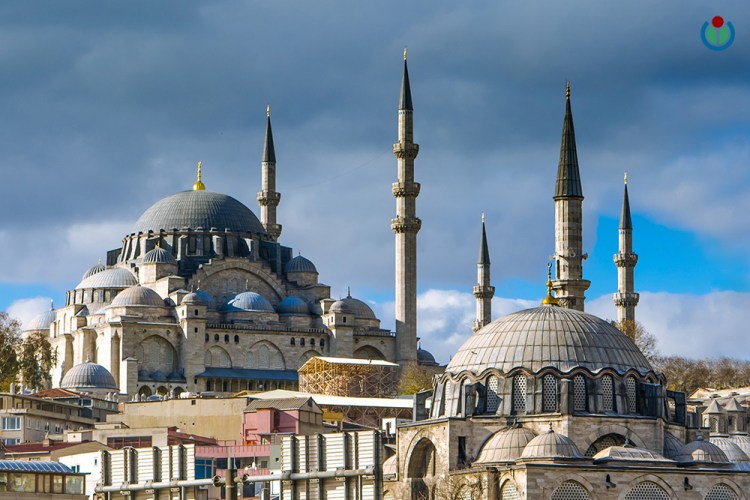
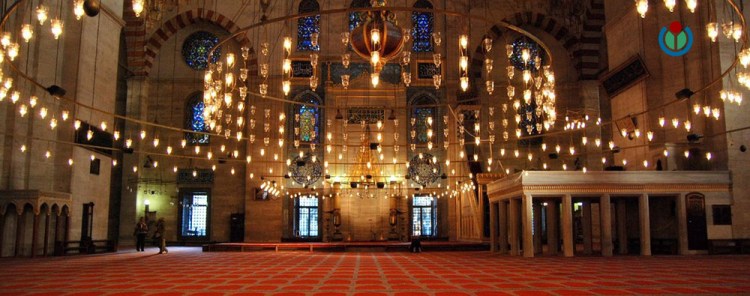
On our way back we stopped over to visit the Süleymaniye Mosque, another huge ornate mosque located near the Golden Horn. This vast religious complex blended Islamic and Byzantine architectural elements. Inside, the building is breathtaking in its size and pleasing in its simplicity. This mosque had the full complement of public services: imaret (soup kitchen), medrasa, hamam, hospital etc. Many of these buildings have been retained and sympathetically adapted for reuse.
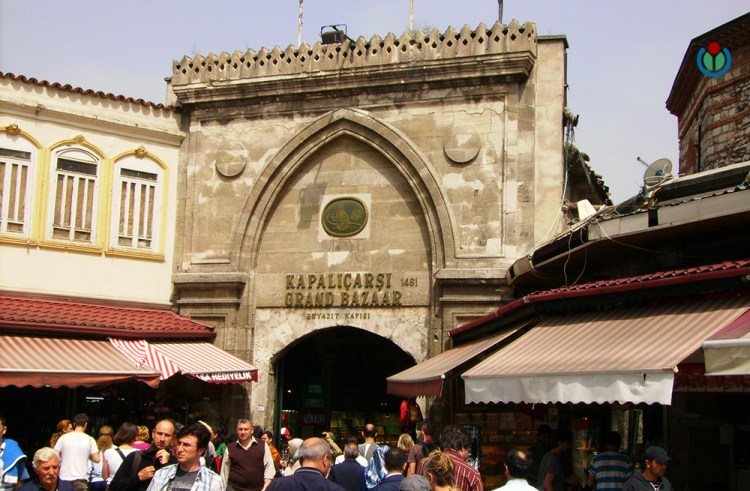
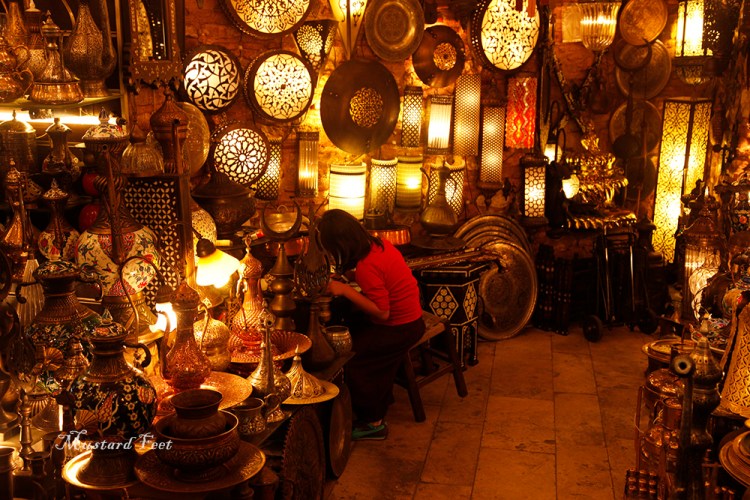
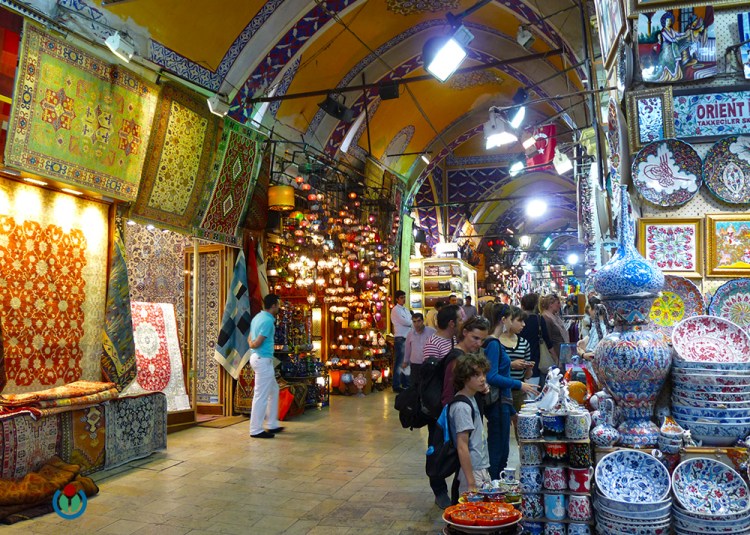
On the last half of our final day, we reached the Grand Bazar. Dating back to the Byzantine era, Istanbul’s Grand Bazaar is considered the oldest shopping mall in the World. It started out as a series of different types of markets all right next to each other and when the Ottomans took over in 1453 they starting bringing them all under one roof. As the numerous markets turned into one large roofed market, it gained the name Kapalı Çarşı, meaning Covered Market. The Covered Market continued to grow until becoming the labyrinth it is today known as the Grand Bazaar. In all, the conjoined areas of the Grand Bazaar make up a maze of 61 streets, 4400 shops, 2200 workshops, 18 fountains, 40 inns. To give you an idea on how massive the Grand Bazaar is, today it employs over 30,000 people and gets over 300,000 shoppers daily. As such a large conglomerate, it’s safe to say you can find almost everything imaginable on sale at the Grand Bazaar. Jewelry both real and fake, silk cloth, tons of beautiful ceramic dishware, copper ware, mosaic hanging lights, Oriental imports, Turkish Delight stands, tradition Ottoman outfits, Turkish Rugs, Fez hats, and tons of knock off designer clothing, shoes, and luggage. It was impossible for us to cover the bazaar entirely. We wandered round and finally found a place where we got a lovely ceramic place and the mandatory Turkish lamp. Once we were happy with our shopping we headed back to the hotel to dump our new found gifts and pack for next days flight to Cappadocia (read about Cappadocia in our separate blog post).
Before leaving Istanbul we had to taste the kebabs, again! This time we went to an alley off the Divanyolu Caddesi which has rows of restaurants. Once you enter you will be bombarded with various kinds of smells and your olfactory system will go for a roller coaster ride. We had our dinner at Sir Evi Restaurant. Pricey but excellent and a must try place!
With a heavy stomach we walked back to get a good night sleep before catching the early morning flight to Kayseri.
Visit this magnificent if you can. It is more than a hub, more than a destination, more than a checklist being scratched from your bucket list. Go there to discover and experience.
Map of Places:
The Blue markers are the sights and the Green ones are the food joints. The Purple ones are the places we did not visit but are recommended.
List of Places:
- Blue Mosque
Entrance fee: Free
Visiting Hours: Daily, One Hour after Sunrise and One Hour before Sunset
Best Time to Visit: Between the prayer times. Preferably just after 9 am.
Contact: http://www.bluemosque.co/ - Basilica Cistern
Entrance Fee: 20TL
Visiting Hours: Daily, 9am – 5.30pm
Contact: http://yerebatan.com/homepage - Hagia Sophia
Entrance fee: 40TL
Visiting Hours: Monday Closed. 9am – 6.30 pm. Last entry at 5.30 pm.
Contact: http://ayasofyamuzesi.gov.tr/en - Topkapi Palace
Entrance fee: 40TL for the Musuem, Additional 25TL for Harem
Visiting Hours: Closed Tuesdays. 9 am – 5 pm.
Contact: http://topkapisarayi.gov.tr/en - Süleymaniye Mosque
Entrance fee: Free
Visiting Hours: Daily, One Hour after Sunrise and One Hour before Sunset
Best Time to Visit: Between the prayer times. Preferably just after 9 am. - Chora Church
Entrance fee: 30TL
Visiting Hours: Daily. 9am – 4.30 pm.
Contact: http://www.choramuseum.com - Galata Tower
Entrance fee: 25TL
Visiting Hours: Daily. 9am – 8.30pm
Contact: http://www.galatakulesi.org - Grand Bazaar
Visiting Hours: Sunday Closed. 8.30am – 7 pm
Transporation Tips
As I said earlier, we prefer to stay at the old town. While coming to the this part of town from airport, I would suggest to take a taxi. But get the yellow ones from outside the airport. However beware of common problems like lack of change and detours, however we did not face this problem.
Metro does not go to Sultanahmet district and you have to take the M1A red line from the airport and change to T1 Blue Tram line at Zeytinburnu to reach Sultanahmet or Taksim. It can be quite a struggle with this option with luggage and the rush that normally is found in metros and trams and I personally would not recommend it, specially when you have just arrived and have luggage.
Shuttle Buses are also available but they go to Taksim Square.
Another option is Efendi travels who have affordable price airport transfer service.
Check them out here
Check out the Metro-Tram-Funicular map here
Blue Mosque-Hagia Sophia-Topkapi Palace-Basilica Cistern-Grand Bazar are all in walking distance from each other and I would like you to take a walk in this part of the city. However the T1 Blue Tram Line connects them too.
Sultanahmet stop for Blue Mosque, Hagia Sophia, Basilica Cistern
Gulhane Stop for Topkapi Palace
Kapali Carsi stop for Grand Bazaar
Sirkeci or Eminonu for Galata Bridge and New Mosque
Karakoy stop for Galata Tower. From Karakoy you will get the funicular to Shishane, which is the starting point of Istiklal Cadesi.
Kabatas stop (terminating stop) for Dolmabahçe Palace
Chora Church: Take Bus 91O or 32 from Eminonu Stop and get down at Edirnekapi stop.
For Balat take Bus 99 from Emunonu.
However, if you can manage the time, walking is the best option for most of these, except for Balat and Chora Church.
General Tips:
- Read the history before you go. You will enjoy the city ten times more.
- Get your e-visas done online. Get it done here
- Negotiate the prices at Grand Bazaar
- Dress modestly when visiting a mosque
- Smoke a Nargile
- Eat Hot Pot Clay Kebabs.
- Go to a Hamam (Cagaloglu Hamam)
- Beware of your wallet in crowded trams and places.
 Mustard Feet's Journeys
Leave a comment