
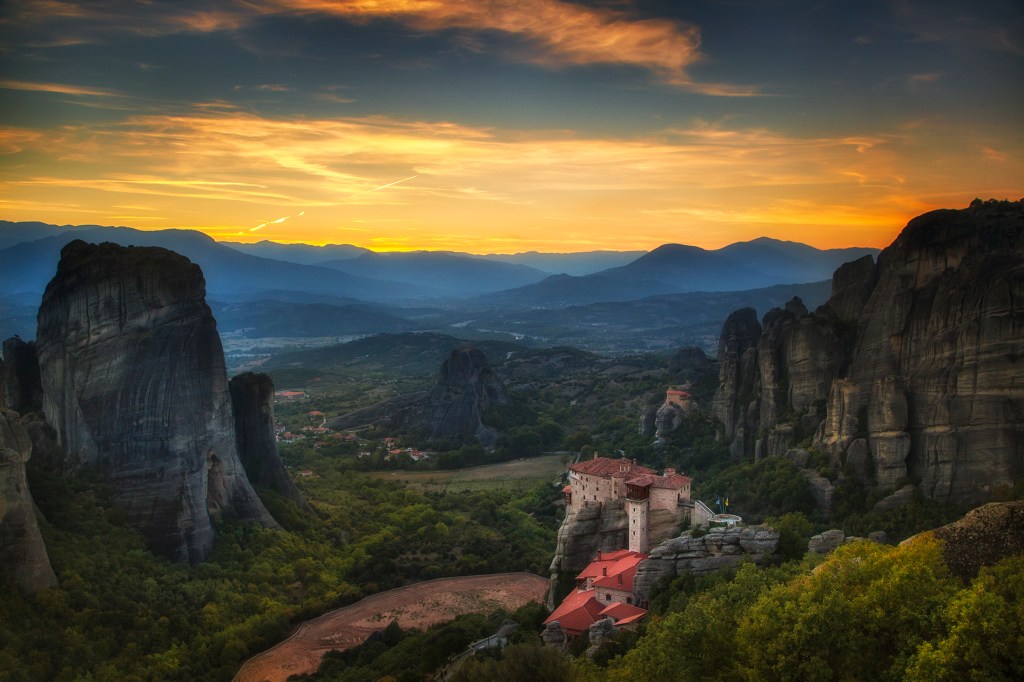
Located at the northwest tip of the plain of Thessaly in Greek mainland, the region of Meteora is unique. It is a small region where an ancient monastic community and a rare geological phenomenon of huge rock pillars coexist in absolute harmony. Meteora is defined by a series of large pillars of rock, with some stand entirely out on their own, creating an unpredictable landscape. It’s these upright pillars of rock that give the area its name – “Meteora” roughly translates to “suspended in air”. This landscape alone would be enough of a draw for tourists, but what makes Meteora special is that on many of the cliffs of many of these rocks are Greek Orthodox monasteries which were built in the middle ages in such a remote place to avoid the invading Turks. Thus, the monasteries themselves seem “suspended in the air”. At one point there were two dozen monasteries across Meteora, today only six remain active.
And on a warm beautiful day, after an early breakfast, we were ready to start exploring this mystic place. The previous day, we have taken a train from Athens to Kalambaka, walked down the cobbled lanes with pastel houses and slept at a cosy place called Alsos House.
Exploring and finding the right places in Meteora is a little tricky, but thankfully we had the expert guidance of visitmeteora.travel.
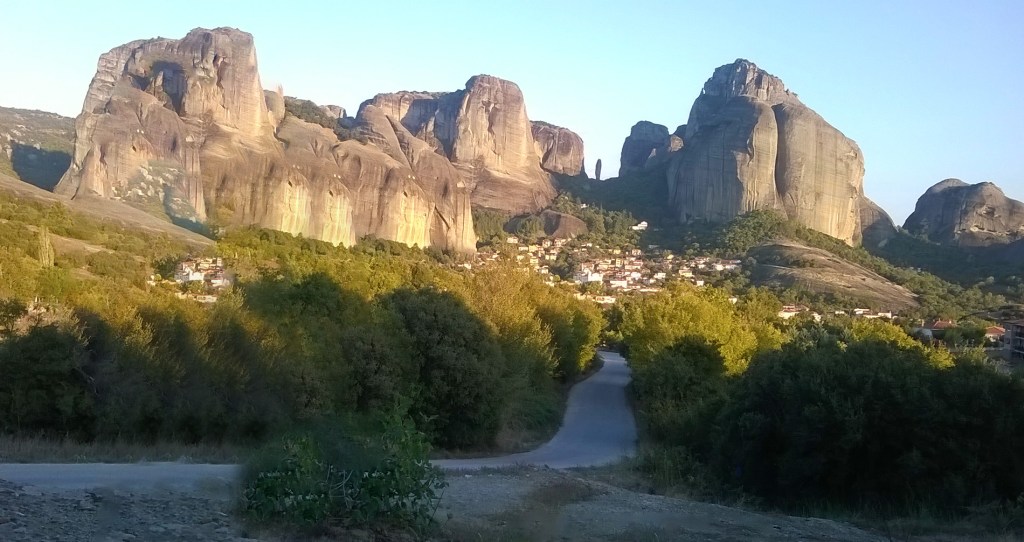
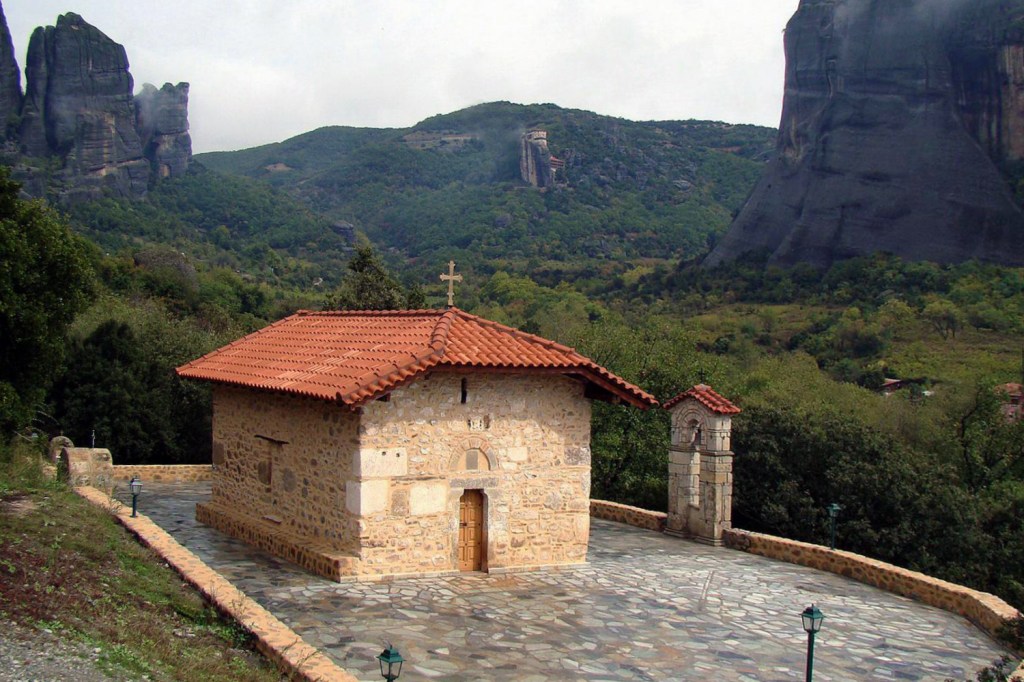
At first, we halted briefly at the Doupani Hermitage. The first hermitages in Meteora were built not on the top of the rocks but on side of the valleys, just as this hermitage, around 9th century A.D. Later on, for reasons of safety and security against the invading turks, the monks moved to the higher rocks.
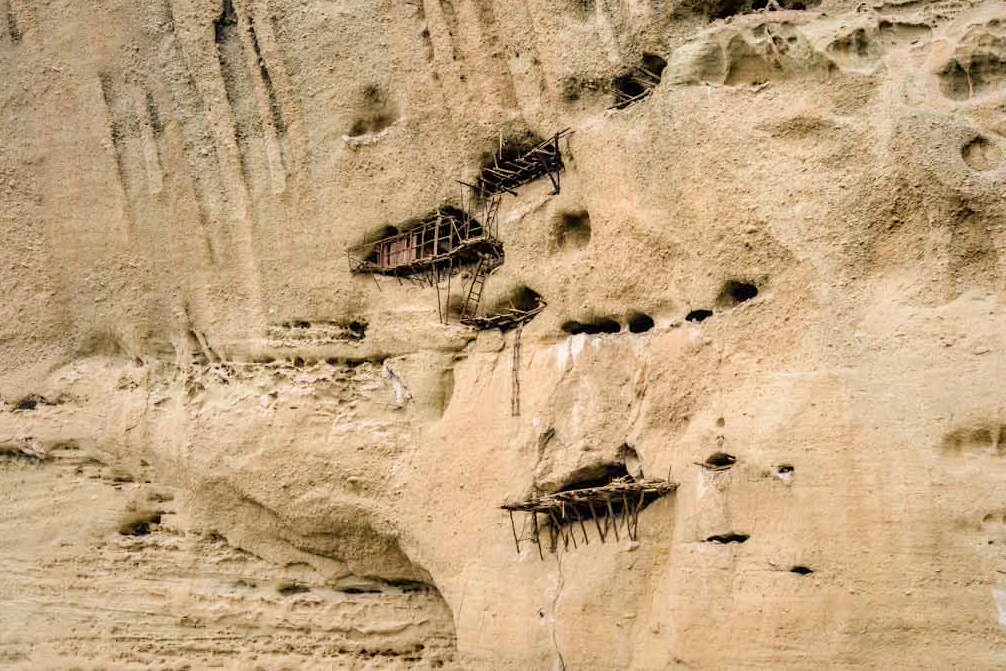
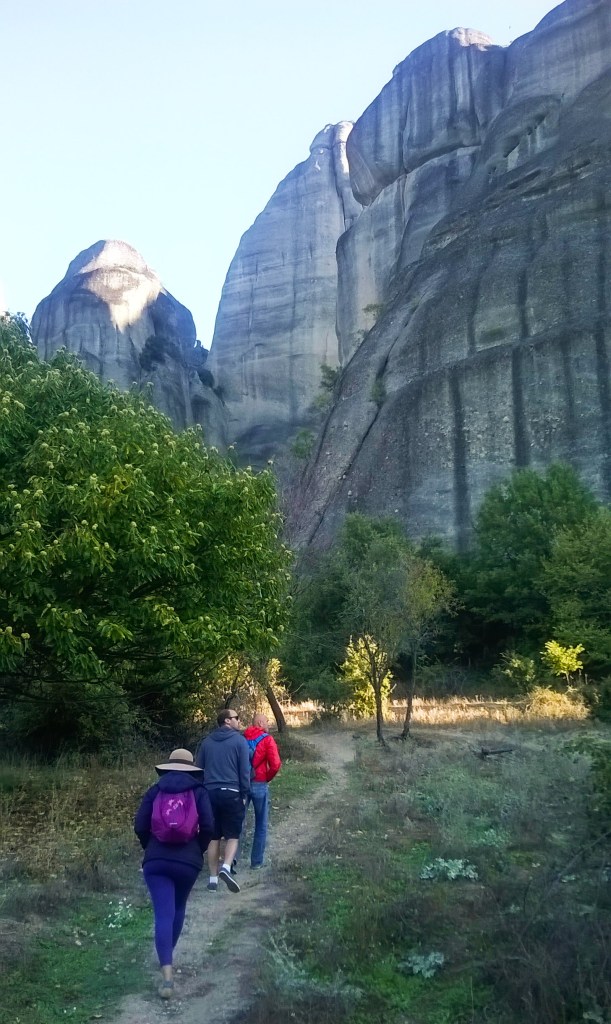
From here, we drove for a few km and started our walk under the tall shadows of the Doupiani rock into the majestic ‘rock forest’ of Meteora. While walking among the tall rock pillars, we could see high up in the rock face, the remains of hermit caves – where the individual hermits used to live. It was very hard to believe that someone could live like that – inside a small cave, built on a vertical rock face with no proper arrangement to climb up or down. It was a humbling experience to find these dwellings which were symbol of some pure and undaunted faith.
The trail gradually began to climb up with trees all around and occasional clearings. We did not mind walking at all – it was very peaceful and pleasant, though the sun was up in the sky, the tall rock towers provided us with ample shades. Our guide told us many folklores and stories on the history of Meteora. He explained how the last Christian emperors of the East were struggling to contain the advancement of the Ottoman Turks in all fronts and for many Christians of that dark period the end was near and their last hope was to retreat in their faith. It was at that time, the monasteries in Meteora came up owing to the advantage given to them by the natural rock cliffs.
We were really engrossed in conversation and suddenly we came atop a rock face and we found ourselves looking at the hidden monastery of Ypapanti. This was one such monastery which was built during the dark age, at around 14th century. Ypapanti’s location was fascinating – it seemed the whole monastery was clinging on the side of the rock face. It must have taken quite an effort to built this kind of monastery.
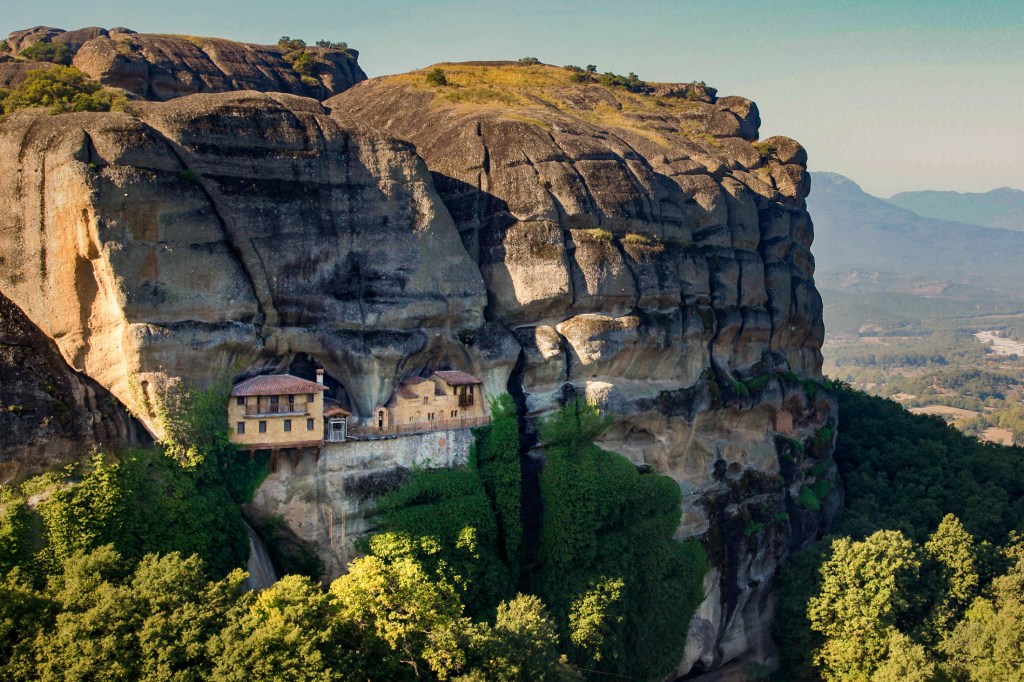
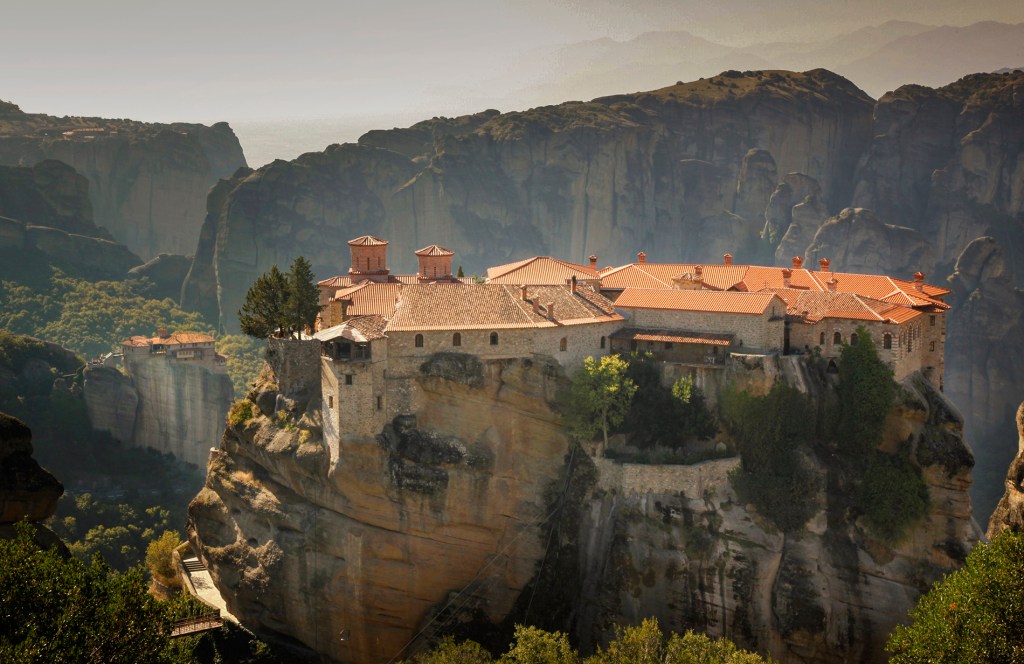
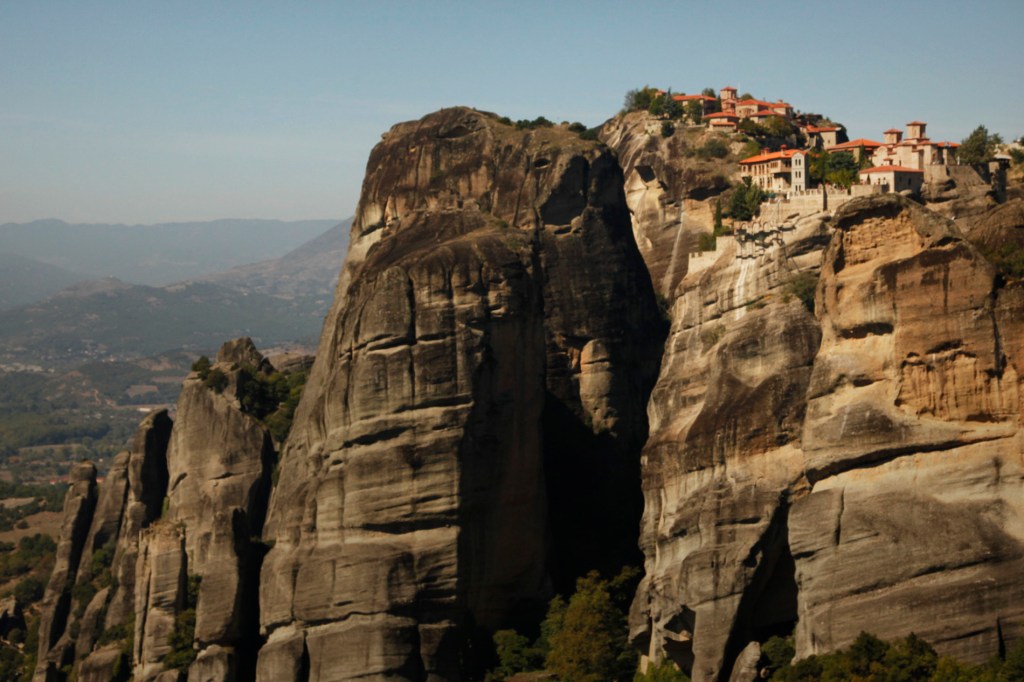
Fully constructed inside a large cavity of a rock, this monastery truly tried to hide itself from outsiders. After more than a few photographs, we continued forward and the trail now started to descend. The last part of the trail turned sunny as the path opened up onto a sloping field. As we crossed the field, the Great Meteoron Monastery came into view. Perched on top of a towering rock cliff, it is the biggest and oldest one of all. It was founded by Saint Athanasios the Meteorite who was the first founder of the monastery and the organizer of the systematic koenovion – i.e. the monasteries atop the rocks. For this reason, the foundation of this monastery is considered to be the beginning of the organized monasticism in Meteora.
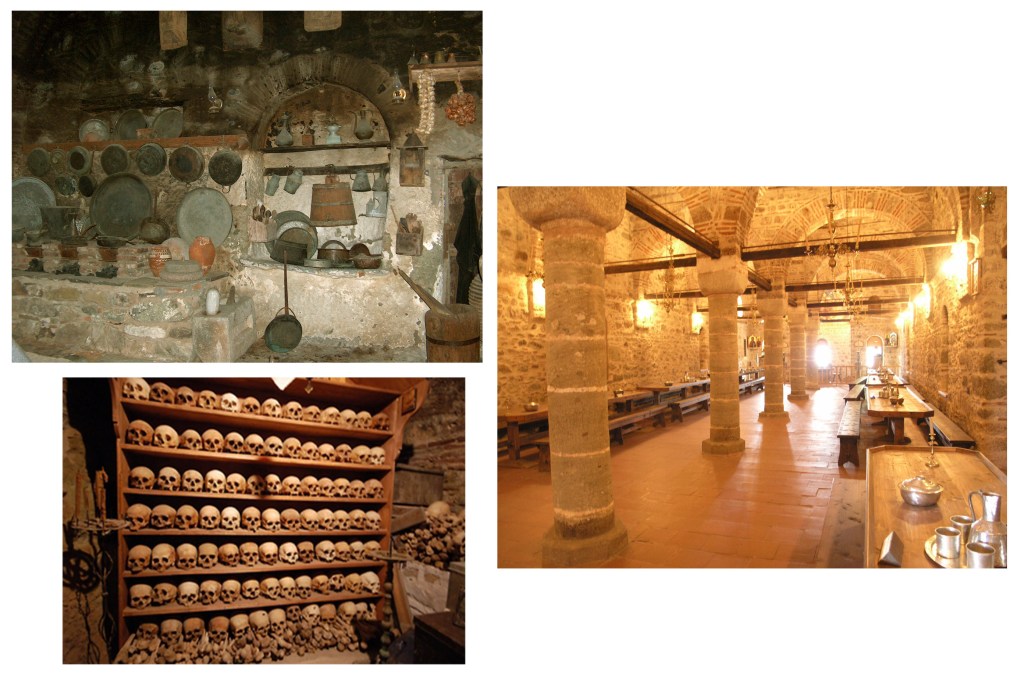
We rested at the large parking lot of the monastery before heading inside. It was a long climb of 300 steps but we were rewarded with some great places. Apart from the original artifacts that were on display, the refectory, the kitchen, the sacristy (where skulls and bones of previous residents are neatly stacked on shelves) all looked unique to us. The kitchen is still blackened with smoke and contains the original bread oven and soup-hearth.
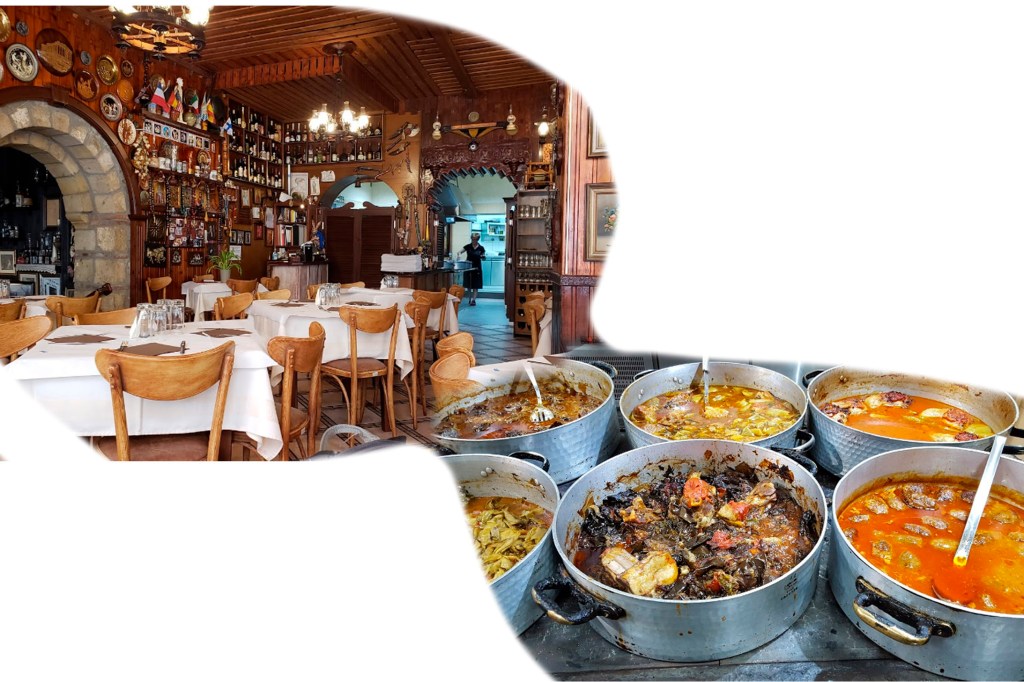
We were really hungry by the time we came out and headed for Kalambaka to have a hearty lunch. Soon, we were sitting inside Restaurant Meteora at the town center. It is an old family run place serving some delicious food. We were so content after having a full meal, that we forgot our camera, hats while leaving. A running man came after us to give them back.
Next we again boarded the group van of Visit Meteora (visitmeteora.travel) and commenced our sightseeing (the long days during European summer is really a boon for travelers).
This tour took us to some great photo ops locations around the region. It proved to be a wonderful experience to see the amazing landscape together with the suspended monasteries from the vantage points. The first stop was monastery of St. Nicholas. The monastery sat on a narrow tower and looked really precarious. The limited surface of the rock forced the building of the monastery to be built vertically on floors, one level on top of the other. From there we stopped to the Varlam Monastery for taking photos.
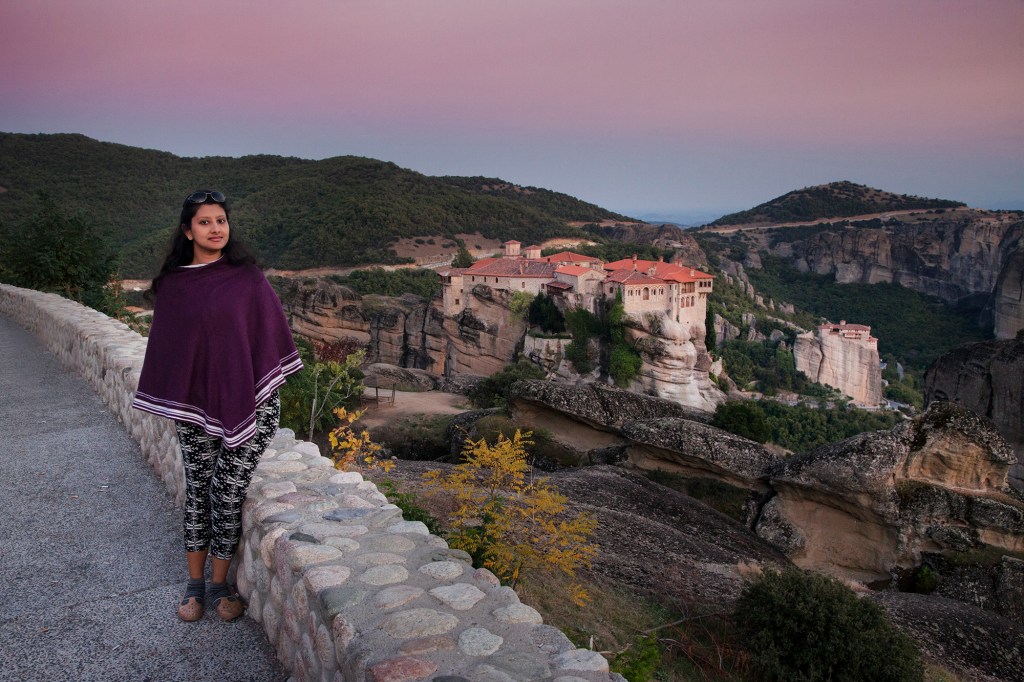
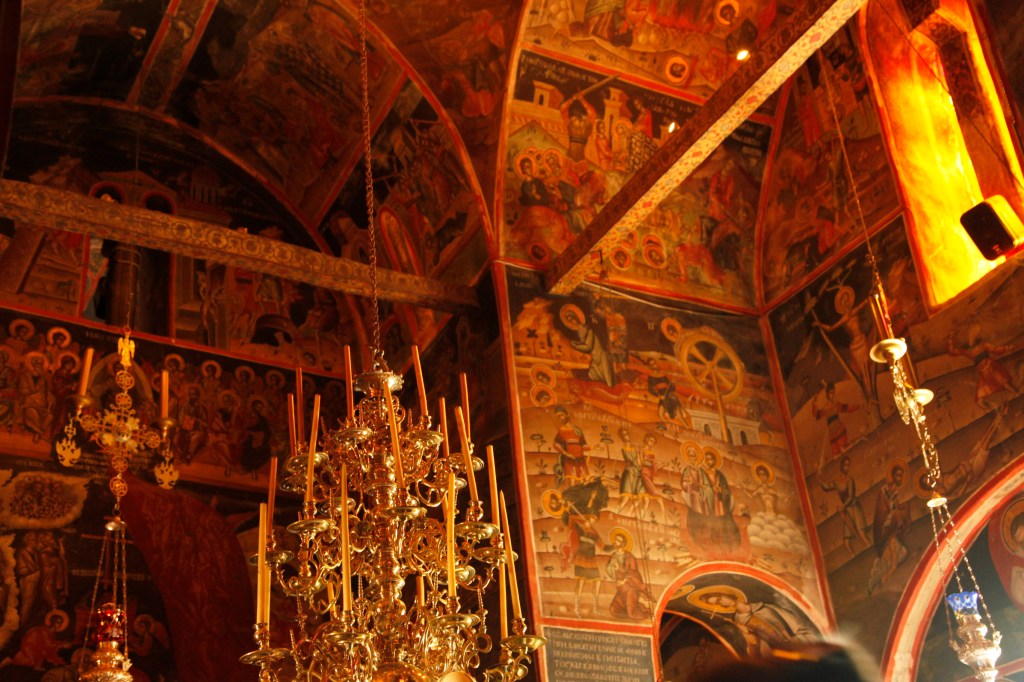
From there we went to St. Stephen’s Monastery. This is the most accessible monastery, where instead of steps you simply cross a small bridge to reach the entrance. We went inside this one and were amazed by the fresco and chandeliers.
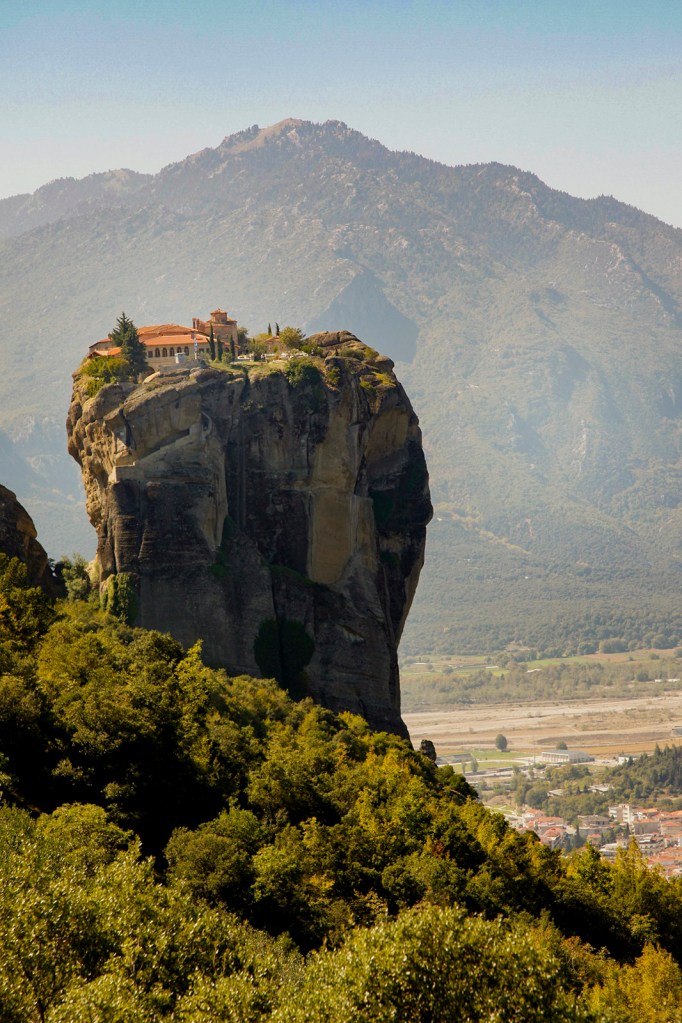
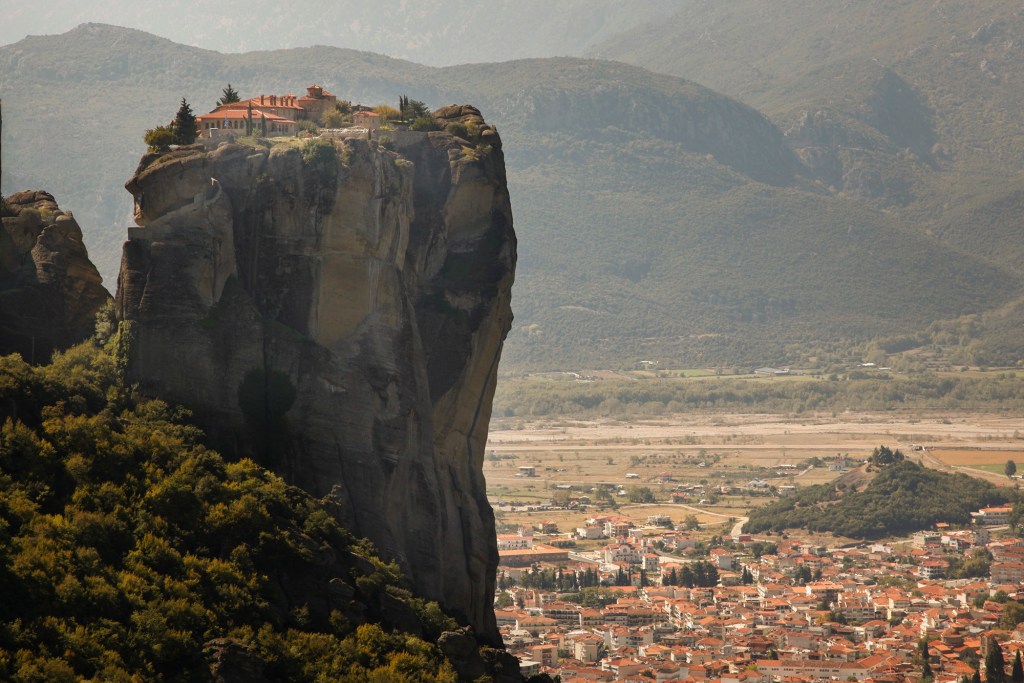
Next stop was a sight to behold. The monastery of Holy Trinity. The location together with the view from the photo spot was fantastic. The monastery really looked like suspended in the air. Perched on a steep and magnificent rock against the backdrop of the old Kastraki town, it really provided us with a striking view. The monastery was made famous in the movies when it was shown in the final scenes in the James Bond movie “For Your Eyes Only”.
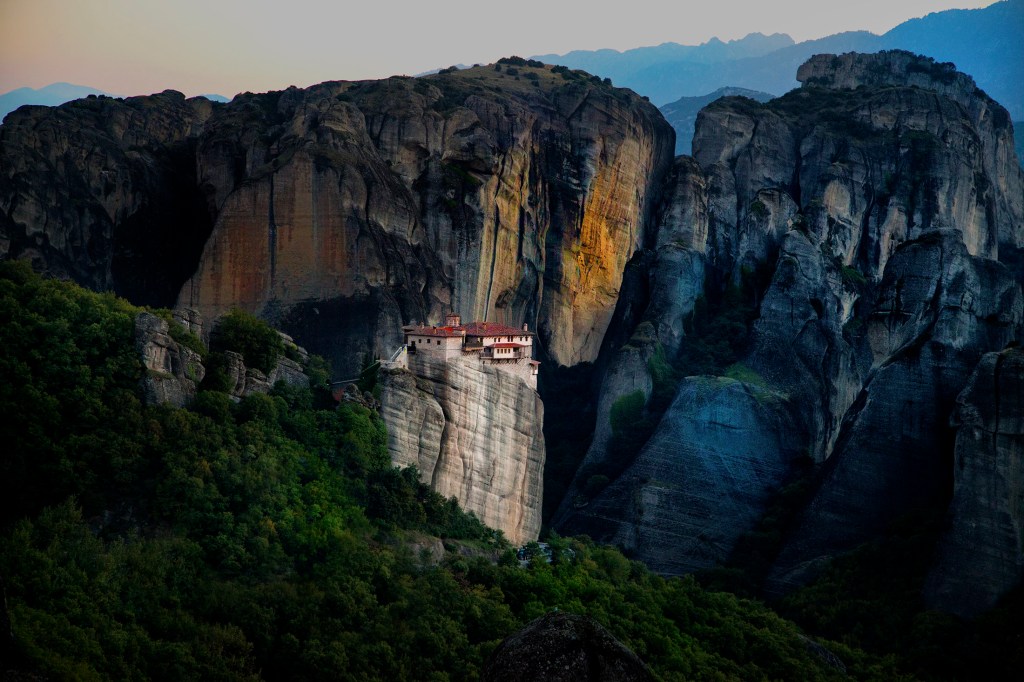
The was nearing the horizon and we made our way to the sunset vantage point. On the way we could see the Rousanau Monastery sitting pretty on a rock tower. We stopped at a couple of viewpoints before reaching the final location – and the view from there was simply mesmerizing. The whole valley lay open before us under a crimson sky, guarded by rock towers with the monasteries of Rosanau and St. Nicholas crowned on top.
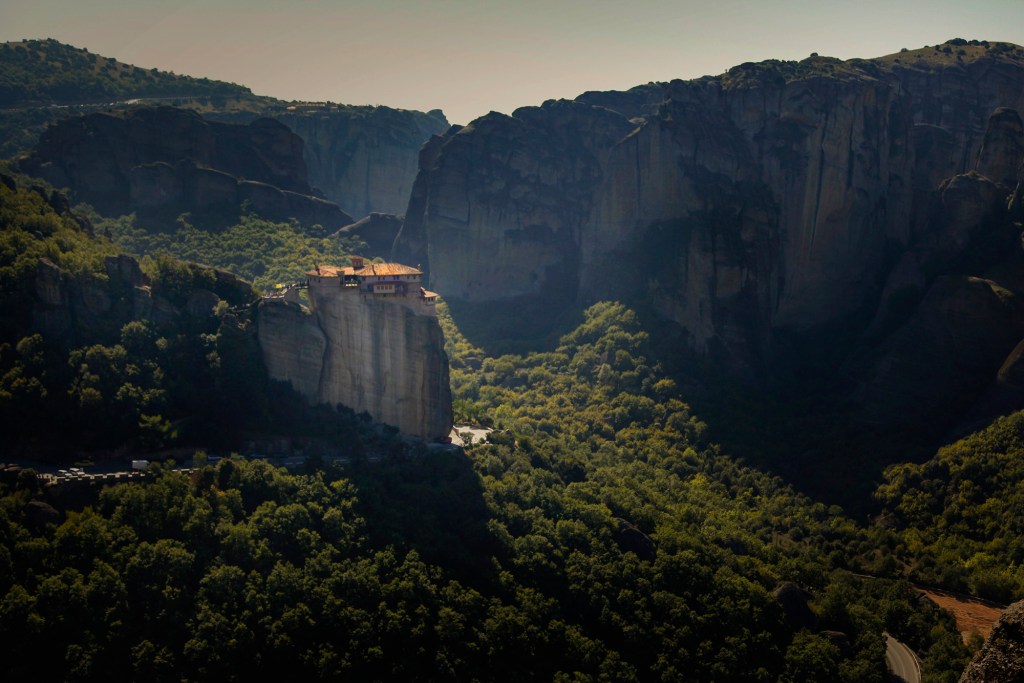
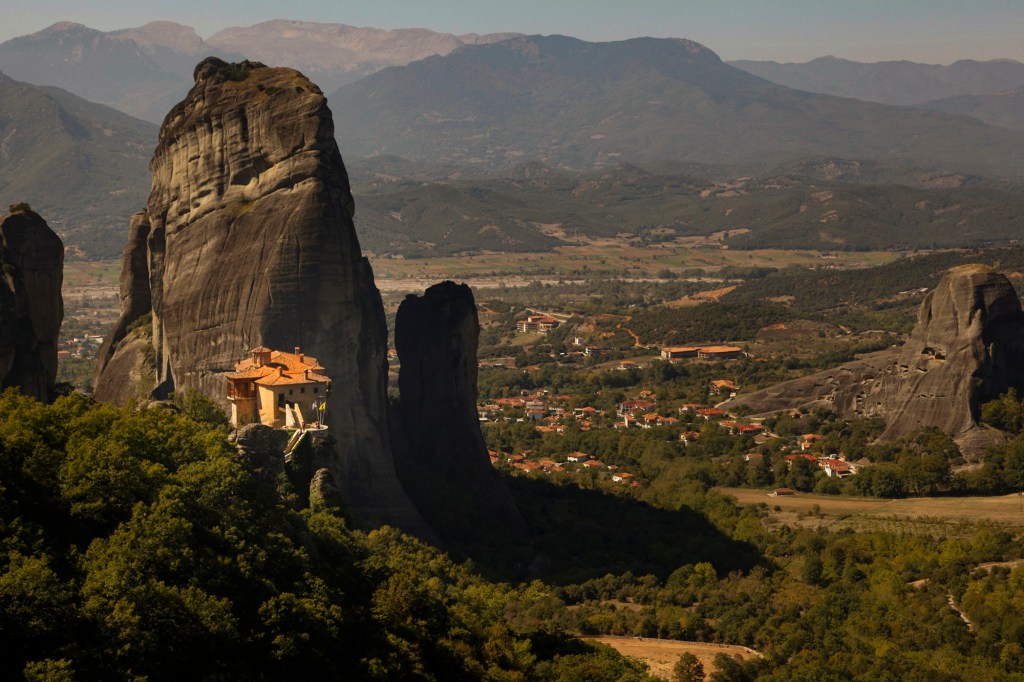
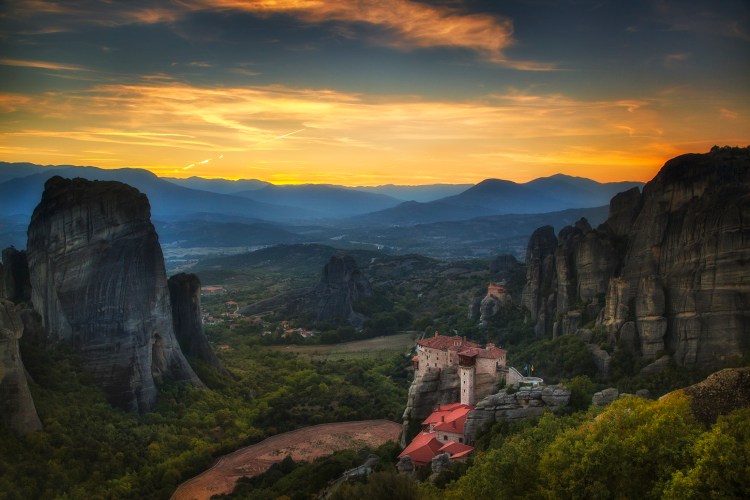
We sat their well past sunset enjoying the view, the wind, the twilight. It was dark when we returned to Kalambaka town. It was day well spent. We were not too tired to take a walk on the narrow cobbled streets before retiring for the night. Our train to Athens leaves next morning.
Meteora Practicalities :
How we reached Meteora?
We took the train. Train runs regularly between Athens Railway Station and Kalambaka train station, with several services a day. It takes around 4-5 hours.
How we moved around in Meteora?
We did a hiking trip in the morning and a afternoon group van trip with the travel company Visit Meteora (visitmeteora.travel). They are good.
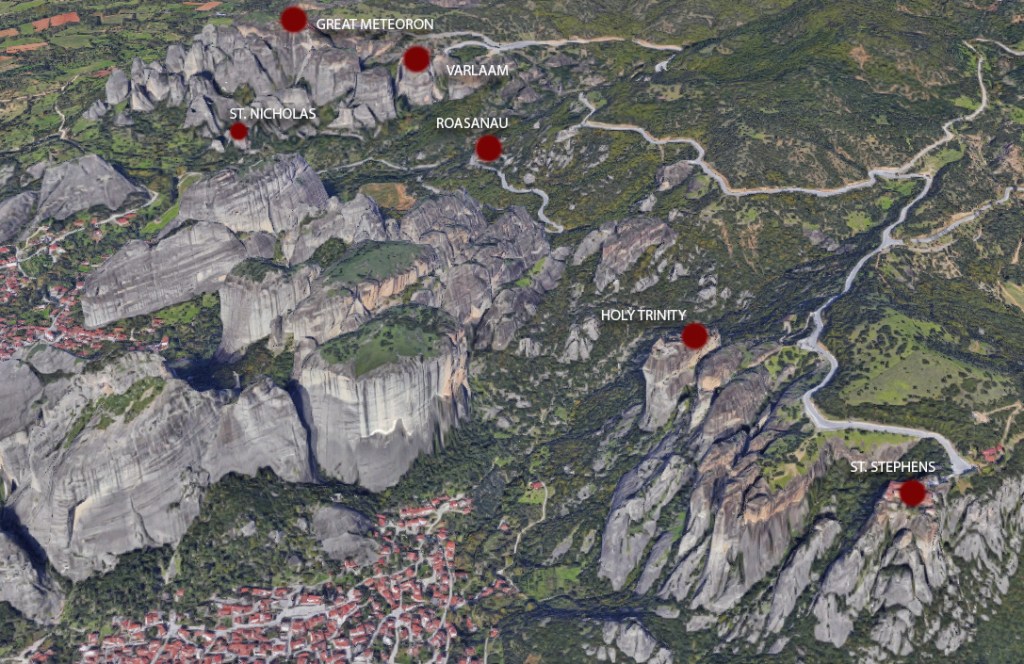
About the Monastery Dress Code –
The monasteries have strict dress codes so women will need to wear a long skirt, dress or sarong. It’s not enough to keep your knees covered so no trousers or shorts. However, all the monasteries have wrap skirts at the entrances that you can borrow. Shoulders should also be covered but I noticed that they are far more strict about the long skirt. Men should wear pants.
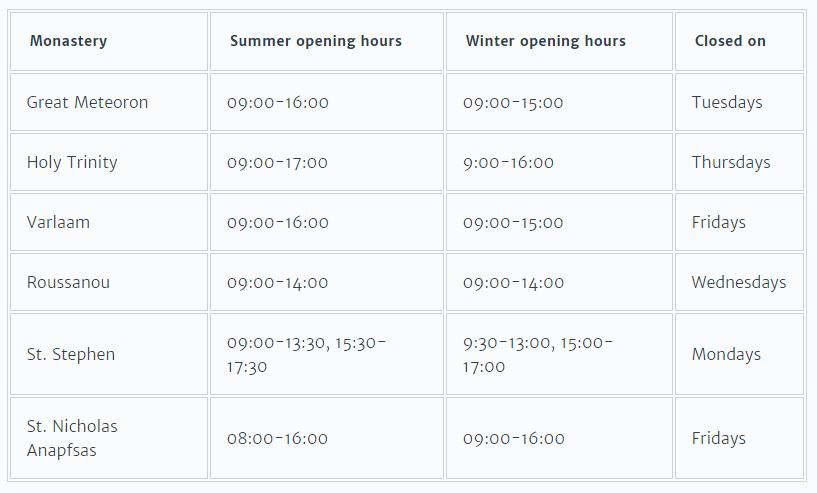
Monastery Timings and Closing Days –
Not all Monasteries are not open in all days. Here is a chart to get the idea

 Mustard Feet's Journeys
Leave a comment